Sri Vijaya Puram, June 24: Garbage found strewn across sections of Collinpur Beach has once again brought the issue of waste management and public littering in the Andaman and Nicobar Islands into focus, highlighting the gap that continues to exist between the objectives of the Swachh Bharat Mission and the reality on the ground in several public spaces.
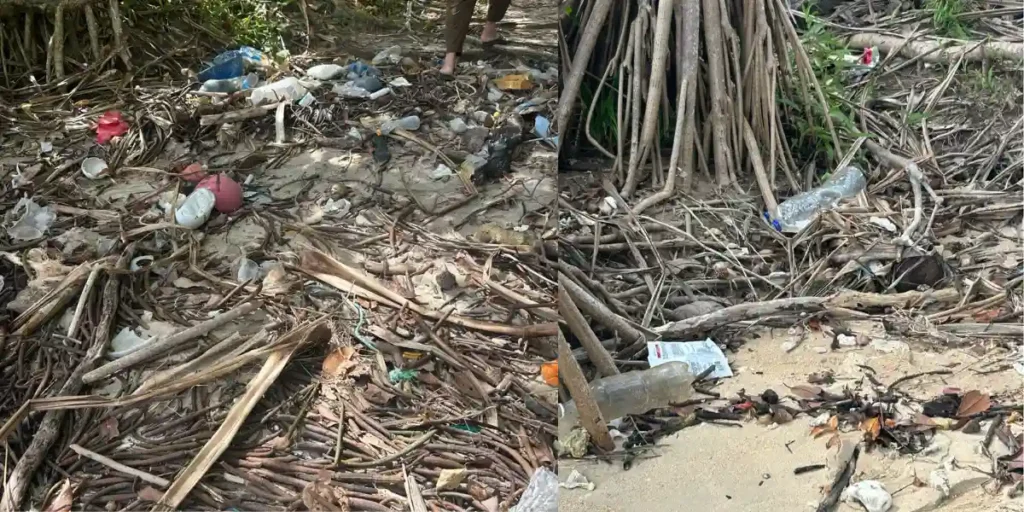
During a recent visit to the beach, the team of The Wave Andaman observed considerable quantities of waste scattered along parts of the shoreline. Plastic packaging, disposable items and other litter were seen lying unattended in the area, affecting the cleanliness of a beach frequented by both residents and tourists.
The observations come despite years of cleanliness campaigns under the Swachh Bharat Mission, which seeks to promote sanitation, responsible waste disposal and cleaner public spaces across the country. Yet, garbage continues to be found in several locations across the islands, including roadsides, bus stands, auto stands, beaches and other community areas.

Before publishing this report, The Wave Andaman shared photographs of the garbage observed at Collinpur Beach with the concerned Panchayat representatives and sought their response regarding the condition of the beach.
When contacted, village Pradhan Sujata said the beach was cleaned regularly and maintained that there was no major issue concerning its cleanliness. According to information available, shortly after the conversation, another individual contacted the media team from the same phone number and identified himself as the Pradhan’s husband while discussing the matter.
The Wave Andaman said seeking comments from elected representatives before publication is a standard journalistic practice intended to ensure fairness, accuracy and inclusion of all relevant viewpoints in matters of public interest.
Mission vs Reality
The issue assumes significance as Panchayati Raj Institutions play an important role in sanitation and waste-management activities in rural areas across the Andaman and Nicobar Islands. Gram Panchayats form part of the islands’ solid waste-management framework and routinely participate in cleanliness drives, waste-collection initiatives and public awareness campaigns under the Swachh Bharat Mission.
While the specific responsibility for maintenance of a particular beach may vary depending on jurisdiction, Panchayats are widely recognised as key stakeholders in local sanitation and environmental management efforts.
The situation at Collinpur Beach reflects a broader challenge confronting the islands, where improper disposal of waste continues to affect public spaces despite sustained efforts by government agencies, Panchayati Raj institutions, volunteers and civil society groups.
Environmental concerns linked to littering have been repeatedly flagged by residents and civic observers, particularly in ecologically sensitive areas and tourist destinations. Beaches are especially vulnerable, with discarded waste posing risks not only to the environment but also to the visitor experience.

Collinpur Beach, located on the outskirts of Sri Vijaya Puram, remains a popular recreational destination for islanders and visitors. The accumulation of garbage along portions of the shoreline has therefore raised concerns about the effectiveness of existing waste-management practices and the need for greater public participation in maintaining cleanliness.
The recurring presence of litter in public places also underscores the importance of civic responsibility. While local authorities continue to undertake cleanliness drives, observers say lasting improvement will require stronger public awareness and behavioural change to prevent waste from being discarded in open spaces.
As the Andaman and Nicobar Islands continue to promote themselves as a clean, environmentally conscious and tourism-friendly destination, the condition of public spaces such as Collinpur Beach serves as a reminder that maintaining the islands’ natural beauty remains a shared responsibility of authorities, residents and visitors alike.