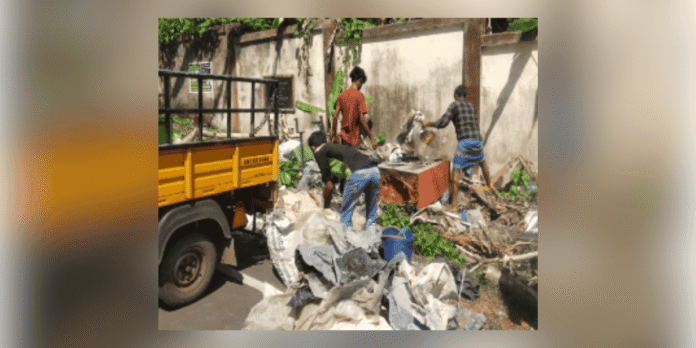
Sri Vijaya Puram, June 15: The implementation of the newly notified Solid Waste Management Rules, 2026, is gathering momentum in the Andaman and Nicobar Islands, with local bodies being trained to identify, map and register major waste-generating establishments as part of a nationwide effort to strengthen waste management systems.
The Department of Science and Technology through the Andaman and Nicobar Pollution Control Committee (ANPCC) conducted a hybrid training programme for officials of the Department of Rural Development and Panchayats and the Sri Vijaya Puram Municipal Council. Around 55 officials participated in the session, which focused on compliance requirements under the Solid Waste Management (SWM) Rules, 2026.
The programme aimed to equip local authorities with the knowledge and technical skills required for identifying Bulk Waste Generators (BWGs), conducting surveys, geo-tagging establishments and ensuring their registration on a centralized portal being developed for waste management monitoring.
Officials explained that the new rules place greater responsibility on large waste-generating entities and local bodies to improve segregation, processing and disposal of municipal waste. The training also provided practical guidance on using digital tools for registration and data management.
A key focus of the session was the definition of a Bulk Waste Generator under the new rules. According to the provisions discussed during the training, entities qualify as BWGs if they meet any one of several prescribed thresholds, including a floor area of 20,000 square metres or more, water consumption of at least 40,000 litres per day, or generation of more than 100 kilograms of waste daily.
The category covers a wide range of establishments including hotels, institutional campuses, commercial complexes, large businesses and other facilities that generate substantial quantities of waste. Authorities said identifying such entities is essential for ensuring compliance and reducing the burden on municipal waste collection systems.
Participants were informed that Rule 6(a) of the SWM Rules, 2026, requires every Bulk Waste Generator to register with the concerned local authority through a centralized portal. The registration process is intended to create a comprehensive database of large waste producers and facilitate more effective monitoring of waste management practices.
The training also highlighted responsibilities assigned to Urban Local Bodies under Rule 30(36). These include conducting detailed surveys to identify Bulk Waste Generators, geo-tagging such establishments and updating relevant information on the portal annually before April 1 each year.
Officials noted that geo-tagging and digital mapping will help authorities better understand waste generation patterns and improve planning for collection, transportation and processing infrastructure. Accurate identification of waste generators is also expected to support enforcement efforts and improve accountability.
The Central Pollution Control Board (CPCB) has developed a registration module to assist Bulk Waste Generators while work continues on a fully integrated national portal. During the training, participants were briefed on the procedures for registration and compliance using the available online platform.
Authorities have directed all eligible Bulk Waste Generators across the islands to register through the CPCB’s Solid Waste Management portal at the earliest. Early registration is expected to facilitate smoother implementation of the rules and prevent compliance-related issues in the future.
Environmental experts have welcomed the emphasis on identifying large waste generators, noting that effective waste management increasingly requires targeted interventions at major sources of waste production. Proper segregation and decentralized waste processing at the generator level are often considered critical components of sustainable urban waste management.
The training programme forms part of broader efforts by the Administration to strengthen environmental governance and improve waste management systems across the Andaman and Nicobar Islands. Officials said capacity-building initiatives for local bodies will continue as implementation of the Solid Waste Management Rules, 2026 progresses.
With growing urbanization, tourism activity and commercial development, authorities view the identification and regulation of Bulk Waste Generators as an important step towards building cleaner and more sustainable communities across the islands.