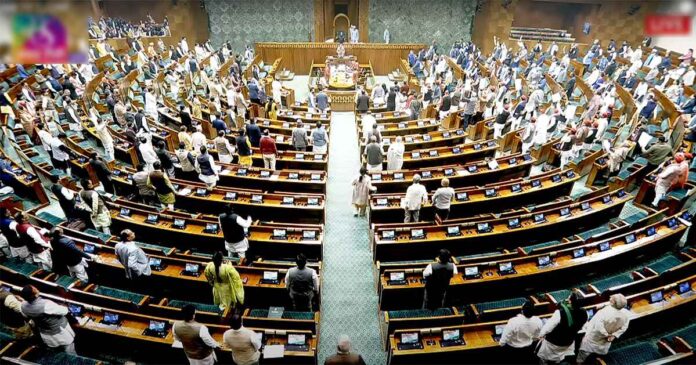
New Delhi, April 17: Women Members of Parliament from Opposition parties on Friday opposed the Centre’s move to advance the Women’s Reservation Bill alongside the Delimitation Bill during the extended Budget session, alleging that the two measures are being linked for political advantage.
Speaking during the ongoing debate, Opposition leaders maintained that while they support the implementation of the Women’s Reservation Act, 2023, they object to its linkage with the delimitation process. They argued that combining the two issues raises concerns over representation and procedural clarity.
Trinamool Congress MP Mahua Moitra stated that the Women’s Reservation legislation has already been passed and questioned the need to connect it with delimitation. She alleged that such a move could alter the political balance by increasing seat share in certain regions.

Moitra also raised concerns about the potential impact on southern states, claiming that regions which have achieved progress in education and population control could see reduced representation. She pointed to a possible decline in the proportional share of southern states and questioned the basis for projections regarding an increase in Lok Sabha seats.
The debate also focused on the timing of implementation. Moitra noted that earlier positions indicated that women’s reservation would follow the completion of the census and delimitation exercise. She questioned the reported shift towards using 2011 census data for decision-making.
Dravida Munnetra Kazhagam MP Kanimozhi Karunanidhi echoed similar concerns, stating that the proposed Delimitation Bill lacks clarity. She said assurances given in Parliament are insufficient without detailed provisions and warned that southern states could be adversely affected by the exercise.
Karunanidhi reiterated that her party does not support linking women’s reservation with delimitation. She argued that the reservation for women could be implemented within the current strength of the Lok Sabha, allocating 33 per cent of seats without waiting for structural changes.

Samajwadi Party MP Dimple Yadav also opposed amendments tied to delimitation, stating that her party is not in favour of constitutional changes that may be used to influence political outcomes. She emphasised that the process should follow a sequence beginning with a census, followed by delimitation, and then implementation of women’s reservation.
The statements reflect a broader disagreement between the Opposition and the Centre over the sequencing and framework of electoral reforms. While the government has proposed advancing both measures during the extended session, Opposition leaders have called for separating the issues and ensuring procedural transparency.
The debate is expected to continue as Parliament deliberates on the proposed legislative measures and their implications for representation and electoral structure.