Nepal witnessed one of its most intense youth-led protests in recent years as Gen Z demonstrators took to the streets of Kathmandu on Monday against the government’s decision to block unregistered social media platforms. The protests escalated into clashes with security forces, prompting authorities to impose a curfew in key areas of the capital.
Crowds gathered at Maitighar to denounce what they called a crackdown on free expression and government corruption. Organised by the youth group ‘Hami Nepal,’ the demonstrations quickly gained traction, amplified by hashtags like ‘Nepo Kid’ and ‘Nepo Babies’ that had been trending online since Prime Minister K.P. Sharma Oli’s administration ordered the blocking of popular platforms.
The decision, announced in late August, required all social media companies to register under Nepal’s Directive on Regulating the Use of Social Media, 2023, within seven days. The deadline expired on September 3, and when platforms such as Facebook, Instagram, WhatsApp, YouTube, and X failed to comply, the government directed internet providers to block access. The ban covers 26 major platforms, leaving millions of Nepalis disconnected from their primary communication tools overnight.
As protests intensified, security forces responded with tear gas, water cannons, rubber bullets, and even aerial shots in an attempt to disperse the crowd. Despite this, demonstrators continued to regroup, with students joining in their school uniforms and carrying books as a symbol of peaceful defiance.
The Kathmandu District Administration Office declared a curfew in Baneshwor after protesters stormed restricted zones and entered the Federal Parliament premises. The curfew area extended from Baneshwor Chowk to Bijuli Bazaar bridge in the west, Tinkune Chowk in the east, Ratna Rajya School in the north, and Shankhamul bridge in the south. It will remain in place until 10 p.m. Authorities described the atmosphere as “highly tense,” citing stone-pelting incidents and repeated clashes between protesters and police.
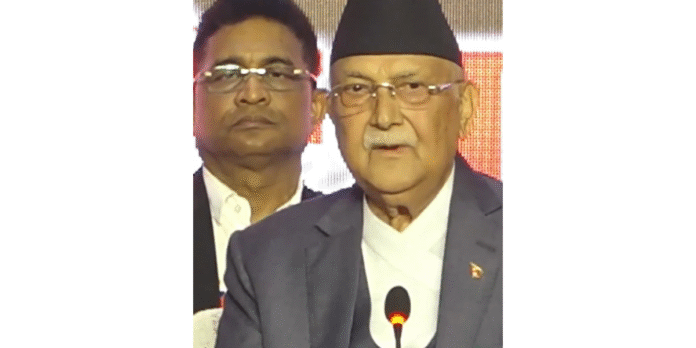
The government defended its actions, with Prime Minister Oli framing the decision as an assertion of national sovereignty rather than a curtailment of freedoms. “We are not against platforms or social networks, we are against lawlessness, arrogance, and belittling our country,” he said in a statement. Oli argued that the companies had refused to register or pay taxes despite repeated reminders over the past year. He described the ban as temporary pain for long-term dignity, saying, “For self-respect, maybe four jobs go for four days, but new ones will come.”
Critics, however, view the move as an attempt to silence dissent and weaken one of the few open spaces for public debate in Nepal. For Gen Z, who rely heavily on digital platforms not just for communication but also for education, jobs, and activism, the ban is seen as a direct attack on their lifestyle and future.
The protests in Kathmandu are expected to spread to other parts of the country, with organisers vowing more rallies in the coming weeks. Social media, ironically the very medium under ban, has been used via VPNs and alternative platforms to share protest updates, routes, and safety guidelines.
Observers note that the government’s heavy-handed response risks alienating an entire generation, with images of students facing off against riot police already circulating globally. The clash has also sparked debate about whether Nepal can balance regulation with democratic freedoms in the digital age.
As night falls in Kathmandu, the city remains under curfew, its streets patrolled by the Nepali Army. For the protesters, however, the message appears unchanged: they are determined to keep fighting against what they see as an unjust ban, and in doing so, have ignited what many are calling Nepal’s first “Gen Z rebellion.”