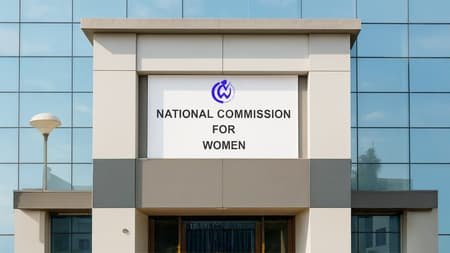
New Delhi/Sri Vijaya Puram, June 11: The National Commission for Women (NCW) has proposed a comprehensive overhaul of India’s prison system, recommending the creation of a statutory National Commission for Prisons and a series of legal, healthcare and welfare reforms aimed at improving conditions for women prisoners, children living in prisons and transgender inmates.
The recommendations form part of the NCW Law Review 2025–26 Report on Laws Relating to Women in Prisons, which has been submitted to the Ministry of Home Affairs and the Ministry of Women and Child Development for consideration.
Led by NCW Chairperson Vijaya Rahatkar, the report advocates a gender-responsive and rights-based correctional framework, arguing that existing prison systems require significant reforms to address the specific needs and vulnerabilities of women inmates.

One of the report’s most significant recommendations is the establishment of an independent National Commission for Prisons, which would monitor prison administration, oversee correctional reforms, safeguard prisoner rights and improve accountability in custodial institutions. The proposed body would place special emphasis on issues affecting women prisoners.
The report is the outcome of an extensive consultation process conducted across the country. Regional consultations were held in several cities, including Patiala, Noida, Dehradun, Aizawl, Hyderabad, Patna, Panaji and Bhopal. The process culminated in a national consultation hosted in Sri Vijaya Puram on November 22, 2025.
According to the NCW, more than 200 recommendations were received during the consultation exercise, with 145 suggestions ultimately incorporated into the final report.
Healthcare reforms feature prominently among the recommendations. The Commission has called for the permanent appointment of medical officers, psychiatrists, gynaecologists, nurses and allied health professionals in prisons. It has also proposed mandatory screening for breast cancer, cervical cancer, HIV, Hepatitis-B, anaemia and other health conditions that disproportionately affect women.
The report further recommends specialised healthcare services for inmates with disabilities, chronic illnesses and other medical needs, along with expanded use of telemedicine and digital health monitoring systems integrated with district healthcare networks.

Recognising the growing mental health challenges faced by incarcerated women, the NCW has proposed trauma-informed care, comprehensive mental health services and post-release counselling support. It has also recommended the deployment of female mental health professionals in women’s prisons.
Special provisions have been suggested for pregnant inmates. The report calls for mandatory institutional deliveries in external hospitals, comprehensive pre-natal and post-natal care, and a prohibition on mentioning prisons as the place of birth on birth certificates issued to children born during incarceration.
In a significant proposal, the Commission has recommended increasing the age limit for children residing with incarcerated mothers from six years to ten years. It has also sought stronger safeguards to ensure adequate nutrition, education, healthcare and developmental support for such children.
The report highlights the importance of maintaining family connections during incarceration. To this end, it proposes child-friendly visitation facilities and greater use of video conferencing and communication technologies to enable regular contact between inmates and their families.
Rehabilitation and reintegration measures also form a major part of the recommendations. The NCW has suggested expanded vocational training, counselling programmes and post-release support mechanisms, including district-level Released Prisoners’ Aid Societies to assist women prisoners after their release.
The report also addresses concerns related to transgender prisoners. It recommends separate accommodation facilities, gender-sensitive healthcare services and safeguards against discrimination and harassment. Searches, it says, should be conducted only by women officers and in a manner that preserves dignity and privacy.
On legal reforms, the Commission has proposed easier access to bail for women accused of non-serious offences. It has recommended mandatory release on personal bonds for indigent women undertrials in bailable cases wherever legally permissible, as well as a presumption in favour of bail for women not accused of offences punishable by death or life imprisonment.
Structural reforms have also been proposed within prison administration. The NCW has recommended that at least 50 per cent of prison personnel should be women and that senior women officers should oversee issues relating to female inmates.
The report further advocates mandatory gender-sensitivity training, regular inspections by independent oversight bodies and periodic reviews of prison regulations to ensure alignment with evolving human rights standards.
If adopted, the recommendations could represent one of the most extensive efforts in recent years to reform India’s prison system through a gender-focused lens, with implications for prison administration, inmate welfare and correctional policy across the country.