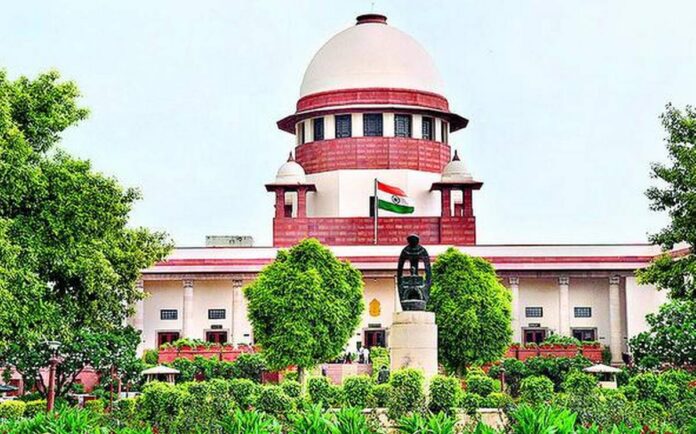
New Delhi, May 20: The Supreme Court has sought responses from the Centre, states and Union Territories on a public interest litigation demanding a minimum 30 per cent reservation for women advocates in government legal panels and law officer appointments, highlighting concerns over their continued underrepresentation in the legal system.
A bench led by Surya Kant, along with Justices Joymalya Bagchi and Vipul M. Pancholi, issued notice after a brief hearing and agreed to examine the matter further next week.
The plea, filed by Ladli Foundation Trust, seeks directions to ensure that women advocates receive at least 30 per cent representation across High Court panels, government law officer positions and legal panels of Central, state governments and public sector undertakings.

During the hearing, senior advocate Vikas Singh referred to findings from a recent survey conducted by the Supreme Court Bar Association, which underscored structural challenges faced by women in the legal profession. He urged the court to mandate greater inclusion of women in government panels, arguing that existing processes do not adequately reflect constitutional principles of equality.
The petition argues that government legal panels play a critical role in representing the state before courts and tribunals, and therefore must align with the constitutional mandate of inclusivity. It states that despite legal guarantees under Articles 14 and 15(3), women remain significantly underrepresented in institutional legal roles.
Citing empirical data, the plea points out that women constitute only about 25.3 per cent of panel lawyers across major states, with several regions reporting even lower participation. It further notes that no woman has held the positions of Attorney General or Solicitor General since Independence, and that there is no representation of women among Additional Solicitors General assigned to High Courts.

The petition also relies on survey findings indicating that many women advocates perceive government panel appointments as more accessible to men, reinforcing the need for structured policy intervention. It contends that lack of representation in such panels limits professional visibility, leadership opportunities and prospects for judicial elevation.
Advocates Varun Singh and Mudit Gupta also appeared on behalf of the petitioner during the proceedings. The plea draws parallels with recent directions of the apex court supporting reservation for women in bar association governing bodies, arguing that similar affirmative measures are both constitutionally valid and necessary in government legal appointments.
The court’s decision to issue notice signals the beginning of judicial scrutiny into gender representation within institutional legal frameworks. The matter has been listed for further hearing, where responses from the Centre and states are expected to shape the course of the proceedings.