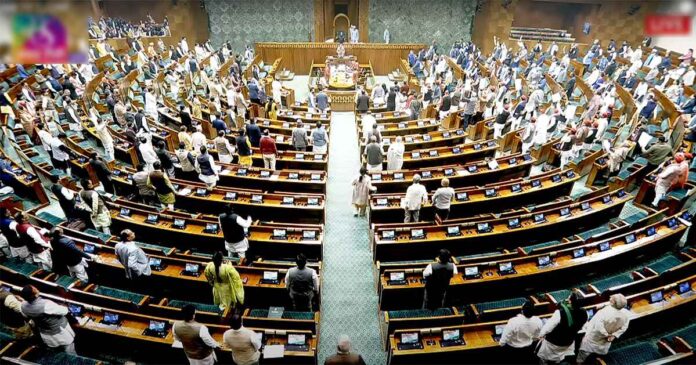
Sri Vijaya Puram (Port Blair), April 16: A proposed overhaul of India’s electoral framework has brought renewed focus on Union Territories, with the Union Territories Laws Bill 2025 emerging as a key piece in a larger legislative package that could significantly shift the country’s political balance.
The bill, expected to be introduced in the ongoing parliamentary session alongside the Constitution Bill 2026 and the Delimitation Bill 2026, seeks to redraw representation for Union Territories in line with a nationwide delimitation exercise. While much of the political debate has centred on states, the implications for Union Territories, often overlooked in national discourse, could be equally consequential.
At present, Union Territories have limited representation in the Lok Sabha, with a combined allocation of seats far lower than that of states. The proposed reforms aim to revise this structure by linking representation to updated population data, replacing the decades-old framework based on the 1971 Census.
Under the broader proposal, the Lok Sabha’s strength could rise from 543 to around 850 seats, with approximately 35 seats earmarked for Union Territories. This expansion, while modest in comparison to states, is expected to recalibrate the political weight of regions such as Delhi, Puducherry, Ladakh, and the Andaman and Nicobar Islands.

UT Bill signals recalibration of representation
The Union Territories Laws Bill 2025 proposes to institutionalise a structured delimitation process for UTs, mirroring the mechanism planned for states. This includes the involvement of a delimitation commission that will redraw constituency boundaries based on updated population figures.
For Union Territories like the Andaman and Nicobar Islands, which currently send a single representative to Parliament, the bill raises questions about whether enhanced representation or boundary restructuring could alter political engagement with the Centre.
The move is also being viewed through a strategic lens. Union Territories, many of which hold geopolitical or administrative significance, are directly governed by the Centre. Any change in their parliamentary representation could influence not only electoral outcomes but also policy prioritisation and administrative focus.
While the bill outlines provisions for transparency, such as draft publications, public objections, and hearings, the lack of clarity on how seat allocation among UTs will be balanced has led to cautious responses from political observers.

Nationwide ripple effect and political contest
Beyond Union Territories, the proposed delimitation exercise is expected to trigger a broader shift in India’s political equilibrium. By increasing the total number of constituencies and redrawing their boundaries based on the 2011 Census, the reforms could alter the relative influence of states in Parliament.
States with higher population growth, particularly in northern India, are likely to see a larger increase in seats. In contrast, several southern states, which have recorded lower population growth due to effective family planning measures, fear a relative decline in their political weight.
This emerging fault line has already sparked political debate, with leaders from southern regions arguing that the exercise could penalise states that have succeeded in controlling population growth. The Centre, however, has indicated that efforts will be made to ensure proportional balance, though specifics remain unclear.
The stakes are further heightened by the linkage between delimitation and the implementation of a 33% reservation for women in Parliament and state assemblies. With the women’s quota contingent on the completion of delimitation, the passage of these bills becomes critical not just for electoral restructuring but also for advancing gender representation.
As Parliament prepares to take up the legislative package, the focus is likely to remain on how these changes will reshape India’s federal structure. For Union Territories, the Union Territories Laws Bill 2025 places them firmly within this transformation, signalling a shift from the margins to a more defined role in the country’s evolving political architecture.
With competing regional interests, constitutional requirements, and electoral implications converging, the coming weeks could determine the contours of India’s political balance for decades to come.