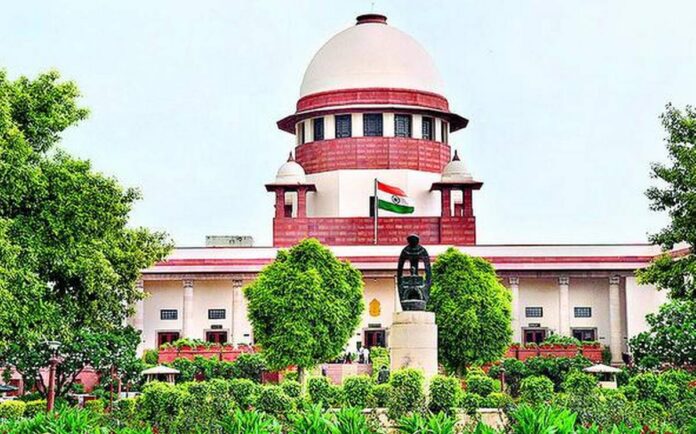
New Delhi, June 3: A fresh scientific review of the ecologically sensitive Aravalli Hills and Ranges is set to begin after the Supreme Court constituted a five-member High-Powered Committee (HPC) to examine issues surrounding the definition, demarcation and long-term protection of one of India’s oldest mountain systems. The move comes amid continuing concerns over environmental degradation, mining activities and the preservation of ecologically connected landscapes across the Aravalli region.
A three-judge Bench comprising Surya Kant, Joymalya Bagchi and Vipul M. Pancholi directed the constitution of the committee to undertake a comprehensive scientific assessment of environmental, geological and ecological issues linked to the Aravalli Hills and Ranges.
The court appointed the Director General of the Indian Council of Forestry Research and Education as the ex officio chairperson of the committee. Other members include former Forest Survey of India Director General Dr Subhash Ashutosh, retired Geological Survey of India Director Dr Rajendra Kumar Sharma, former Ministry of Environment, Forest and Climate Change Joint Secretary Brij Mohan Singh Rathore and former Delhi University Botany Department Head Prof. Ashok K. Bhatnagar.

The apex court also designated Prof. Jagdish Krishnaswamy, Dean of the School of Environment and Sustainability at the Indian Institute for Human Settlements, and Prof. Laxmikant Sharma of the Central University of Haryana as special invitees to assist the committee when required.
According to the court, the panel will evaluate the implications of parameters previously proposed for identifying the Aravalli range and determine whether their implementation could result in ecological or environmental consequences that may be difficult to reverse. The committee has been tasked with ensuring that any future course of action remains scientifically sound and aligned with the principles of environmental protection and sustainable development.
The HPC has been directed to adopt a broad consultative process by inviting suggestions from governments, environmental groups, conservationists, non-governmental organisations, mining lease holders, project proponents, farmers, mine workers and local communities. The committee will issue a public notice seeking representations and inputs from stakeholders.

The proceedings arise from a suo motu case concerning the definition of the Aravalli Hills and Ranges. In December 2025, the Supreme Court kept its earlier directions on a revised definition of the Aravallis in abeyance after concerns emerged that the proposed criteria could exclude ecologically connected areas from legal protection.
The court later extended the stay on its previous verdict and ordered maintenance of status quo while considering broader scientific and environmental concerns. The issue has gained national significance because the Aravalli range extends across Rajasthan, Haryana, Delhi and Gujarat and faces increasing pressure from mining and environmental degradation.
The committee has been directed to submit its report by August 31, 2026. The matter will next be heard by the Supreme Court on September 7, 2026, after the panel completes its comprehensive assessment of the issues concerning the Aravalli ecosystem.