Sri Vijaya Puram, Aug. 29: Survival International, a global Indigenous rights organisation that campaigns to protect tribal peoples, their lands and communities from exploitation and forced displacement, has asked a United Nations committee to intervene over the proposed Great Nicobar mega infrastructure project, alleging that it could threaten the survival of the Shompen and adversely affect the Nicobarese community.
In a submission before the United Nations Committee on the Elimination of Racial Discrimination (CERD) during its 118th session, held from August 10 to 25, Survival International called for the project to be cancelled and questioned whether the affected Indigenous communities had given their Free, Prior and Informed Consent (FPIC).
CERD is a body of independent experts that monitors countries’ implementation of the International Convention on the Elimination of All Forms of Racial Discrimination (ICERD), a United Nations treaty to which India is a party.
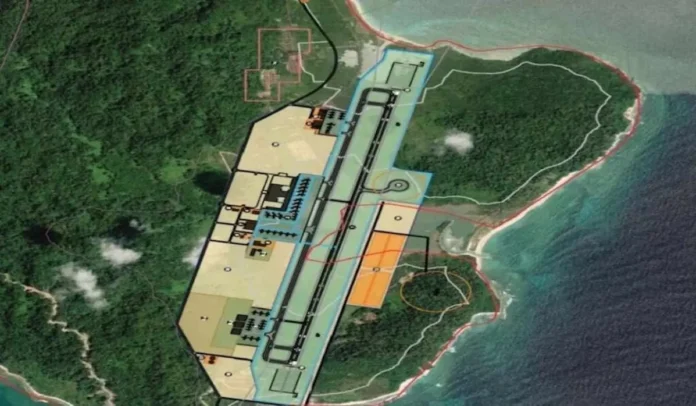
The intervention comes as the Centre moves ahead with the Great Nicobar project, which envisages an international container transshipment terminal, a greenfield international airport, a township and power infrastructure. The government has projected the development as strategically and economically important, given Great Nicobar’s location close to major international shipping routes.
Survival International, which has consultative status with the UN Economic and Social Council (ECOSOC), estimates that between 100 and 400 Shompen and around 1,000 Nicobarese live on Great Nicobar. It claims around two-thirds of the Shompen live in voluntary isolation with little or no regular contact with outsiders.

Consent Concerns Raised
At the heart of the submission is the organisation’s contention that the development could affect land traditionally used by the Shompen and Nicobarese without their consent.
Survival International said the development extends over more than 244 sq km, including around 130 sq km of rainforest, and claimed about half the project area falls within the communities’ Tribal Reserve.
The organisation cited India’s Forest Rights Act, 2006, the government’s 2015 Shompen Policy and Article 338A(9) of the Constitution, which requires governments to consult the National Commission for Scheduled Tribes on major policy matters affecting Scheduled Tribes.
It also cited International Labour Organization (ILO) conventions and the United Nations Declaration on the Rights of Indigenous Peoples (UNDRIP) in support of its arguments over Indigenous land and consultation rights.
For Shompen groups living in voluntary isolation, Survival International argued that conventional consultation itself was not possible. Citing international observations concerning uncontacted Indigenous communities, it said their decision to avoid contact should be interpreted as withholding consent for projects affecting their territories.
The organisation said CERD had written to the Indian government about Great Nicobar in April 2022 and December 2023 and again raised concerns in May 2026 over the potential impact on Indigenous people’s rights to life, health, environment, self-determination and communal lands. Survival International alleged that the government had not responded to these communications.
The submission also cited Union Ports, Shipping and Waterways Minister Sarbananda Sonowal as saying in June that the government would proceed with the project.
For the Nicobarese, Survival International argued that the development could affect the ability of families displaced by the 2004 Indian Ocean tsunami to return to ancestral settlements.
Disease Risk Flagged
The potentially greater risk for the Shompen, according to the submission, comes from the scale of outside contact that could accompany construction, settlement and tourism.
Survival International warned that isolated Shompen groups could have limited immunity to infectious diseases introduced by outsiders. It cited a 1990 government report which, according to the organisation, recorded severe population declines among Shompen groups exposed to frequent outside contact.
The submission also cited the project’s 2022 Environmental Impact Assessment (EIA) — a study of the likely environmental consequences of a major development — as warning about the dangers of infections spreading among the Shompen.
Environmental damage could compound those risks, it argued. The organisation said large areas of rainforest used by the Shompen for hunting and gathering could be cleared and raised concerns over the proposed port’s impact on the Galathea River and surrounding ecosystem.
Survival International also claimed government plans could eventually bring as many as one million tourists and other visitors to Great Nicobar annually. It warned that new roads, settlements and tourism could increase unauthorised contact and exploitation, drawing parallels with the controversial “human safaris” involving tourists seeking encounters with the Ang, formerly known as the Jarawa, in the Andaman Islands.
The organisation cited a 2024 appeal by 39 international genocide experts who described the project as a “death sentence for the Shompen”, as well as an appeal by Indian anthropologists and other experts seeking its cancellation.

Survival International’s campaigning methods and portrayal of Indigenous disputes have themselves faced criticism. Its campaign involving the San people of Botswana’s Central Kalahari Game Reserve, for instance, triggered disagreements with the Botswana government and some local groups over its portrayal of the dispute. The organisation has rejected such criticism, maintaining that its campaigns amplify the demands of Indigenous communities.
In India, Survival International has also faced legal challenges over its advocacy concerning the Andaman Islands, including a defamation dispute involving a resort operator over development near the Jarawa reserve. The organisation maintained that its campaign was intended to protect the community from increased outside contact.
Survival International has asked CERD to treat the Great Nicobar issue as urgent and call for the project to be cancelled.
The allegations and legal interpretations are those of Survival International and do not constitute findings by CERD. The Centre has maintained that the Great Nicobar project is important for India’s strategic and economic interests and that safeguards for tribal communities and the environment are part of the development plan.