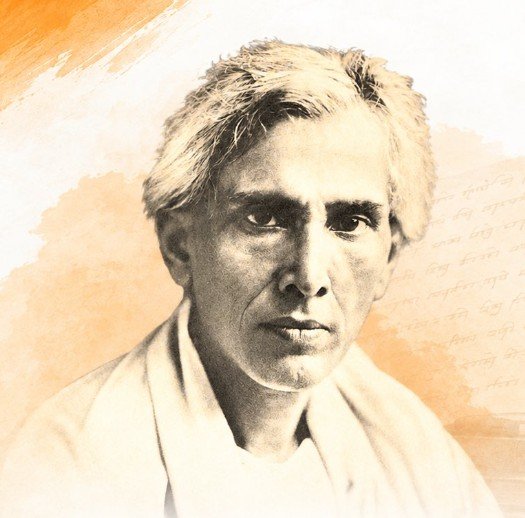
New Delhi, Sept. 16: One hundred and fifty years after his birth, the works of Bengali novelist and short-story writer Sarat Chandra Chattopadhyay continue to find readers and audiences through literature, cinema and popular culture.
Born on September 15, 1876, in Debanandapur village in West Bengal’s Hooghly district, Sarat Chandra wrote about ordinary people and the social circumstances surrounding their lives. His stories explored love, social restrictions, family relationships, sacrifice, rebellion and the choices made by individuals navigating deeply rooted social conventions.
His accessible prose and focus on everyday experiences helped his works reach readers beyond literary circles. His characters, particularly his female protagonists, have also remained subjects of discussion for their resilience and emotional agency within patriarchal social structures.
Characters such as Lalita in Parineeta, Parvati in Devdas and Kiranmayi in Charitraheen are among the women through whom Sarat Chandra explored questions of social expectations, relationships and individual choice.
His writing emerged during a period when Bengal was experiencing significant social and political change. Traditional structures continued to shape everyday life while ideas associated with modernity, reform and nationalism were gaining influence.
This tension is visible in several of his works, particularly in his treatment of women’s lives. His female characters are often confronted by restrictions imposed by family, caste and social convention, while their responses reveal varying forms of resilience and moral independence.
The continuing relevance of these themes has also contributed to the repeated adaptation of Sarat Chandra’s works for the screen.
Devdas, one of his best-known novels, has been adapted into films across different periods and languages. From K. L. Saigal’s early cinematic portrayal to later versions, including Sanjay Leela Bhansali’s 2002 film starring Shah Rukh Khan, the story has repeatedly been reinterpreted for new audiences.
Parineeta has similarly received multiple film adaptations, including Bimal Roy’s 1953 version and Pradeep Sarkar’s 2005 adaptation.
Other filmmakers have also drawn from Sarat Chandra’s writing and themes. His works have provided material for directors exploring relationships, social conventions and human conflict, while Anurag Kashyap’s Dev.D reimagined the central premise of Devdas in a contemporary setting.
The continuing cinematic life of these stories demonstrates how their central conflicts can be interpreted differently across generations while retaining their connection to questions of human emotion and social expectations.
Sarat Chandra’s literary concerns were not restricted to romance and domestic relationships. His 1926 novel Pather Dabi dealt directly with revolutionary politics and anti-colonial resistance. The novel was banned by the British colonial government because of its political content.
The work reflected the nationalist environment of the period and presented revolutionary ideas through its characters and narrative. It also established another dimension of Sarat Chandra’s writing, linking individual struggles with larger questions surrounding colonial rule and political freedom.
His Srikanta, written over several years, follows the experiences and wanderings of its protagonist while exploring questions of freedom, morality and the search for meaning.
Many of the social issues Sarat Chandra addressed have changed considerably since his time, but questions surrounding gender inequality, social hierarchy and individual autonomy continue to feature in public and literary discourse.
His treatment of women remains particularly relevant to contemporary discussions of empowerment. Rather than portraying strength only through direct confrontation, his stories frequently locate it in emotional resilience, personal judgement and the ability to negotiate restrictive social circumstances.
At the same time, accounts of Sarat Chandra’s personal outlook suggest that his social and literary positions did not always correspond neatly with the image of a radical reformer. His adherence to some traditional social and religious practices has been noted in discussions of his life and ideas.
The complexity of the writer’s personal outlook and literary work has contributed to continuing scholarly interest in him.
A century and a half after his birth, Sarat Chandra’s stories continue to circulate through books, classrooms, films and popular adaptations. Their continuing presence reflects the ability of literature rooted in a particular historical and social setting to speak to questions that remain part of contemporary life.