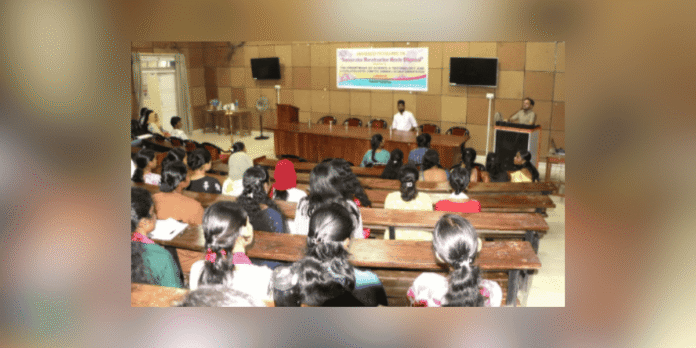
The Department of Science & Technology (DST) and the Andaman & Nicobar Pollution Control Committee (ANPCC) jointly organized an awareness programme on “Sustainable Menstrual Waste Disposal” in collaboration with Dakshin Foundation, Andaman. The event, held at the Lecture Gallery of Jawaharlal Nehru Rajkeeya Mahavidyalaya (JNRM), aimed to promote sustainable menstrual hygiene practices and foster open, stigma-free conversations about menstrual health.
The session was inaugurated in the presence of students, faculty, and youth ambassadors, with a focus on bridging the gap between environmental sustainability and menstrual health management. Dr. Jatinder Sohal, Director (Science & Technology)–cum–Member Secretary (ANPCC), addressed the gathering and highlighted the need to create an inclusive dialogue around menstruation. He underscored that menstruation, often considered a taboo subject, deserves open discussion to build awareness on hygiene, health, and sustainability.
Dr. Sohal emphasized that the growing issue of menstrual waste, comprising non-biodegradable sanitary pads, poses an emerging environmental challenge for the islands. He called upon educational institutions and civil society groups to play a proactive role in encouraging young people to adopt sustainable menstrual products such as biodegradable pads, menstrual cups, and reusable cloth pads. These alternatives, he noted, not only reduce waste but also help promote better hygiene and affordability over the long term.
Adding to the discourse, Dr. Kandi Muthu, Assistant Professor at JNRM, spoke on the significance of awareness and community-level participation in addressing menstrual health. He stated that open discussions within classrooms, families, and communities can help dispel myths and misinformation that continue to surround menstruation. The event, he noted, serves as a reminder that menstrual health is both a personal and an environmental responsibility.
One of the highlights of the programme was the series of interactive sessions conducted by the Youth Ambassadors of Dakshin Foundation, Andaman. Through group discussions, activities, and live demonstrations, they sensitized participants on various aspects of menstrual hygiene, myths and misconceptions, and the environmental impact of traditional menstrual products. The ambassadors encouraged the audience to rethink conventional practices and to consider eco-friendly menstrual products as viable, safe, and sustainable alternatives.
The sessions also covered the safe and hygienic disposal of menstrual waste, a topic often overlooked in household and community-level sanitation discussions. Participants were informed about the harmful effects of burning or indiscriminately discarding sanitary waste, which contributes to soil and water pollution. Instead, the speakers highlighted solutions such as segregation of menstrual waste at source, use of biodegradable disposal bags, and installation of community-level sanitary waste incinerators with proper emission controls.
The event concluded with an open interaction where participants shared personal experiences and discussed ways to raise awareness at the grassroots level. The organizers reiterated the importance of linking menstrual health to environmental protection, underscoring that sustainable menstrual waste management is integral to the broader goals of clean living and ecological balance in the Andaman & Nicobar Islands.
Through such collaborative initiatives, the DST and ANPCC aim to strengthen environmental consciousness while addressing social and health concerns. The partnership with Dakshin Foundation reflects a growing recognition that environmental and public health challenges require a multidisciplinary approach, one that includes scientific institutions, NGOs, educators, and the youth.
The awareness programme marks a significant step toward normalizing conversations around menstruation and promoting responsible waste management practices among the island’s young population. By fostering dialogue and introducing practical, eco-friendly solutions, the event served as a reminder that sustainability begins with informed individual choices, choices that can make a tangible difference to both community well-being and the environment.