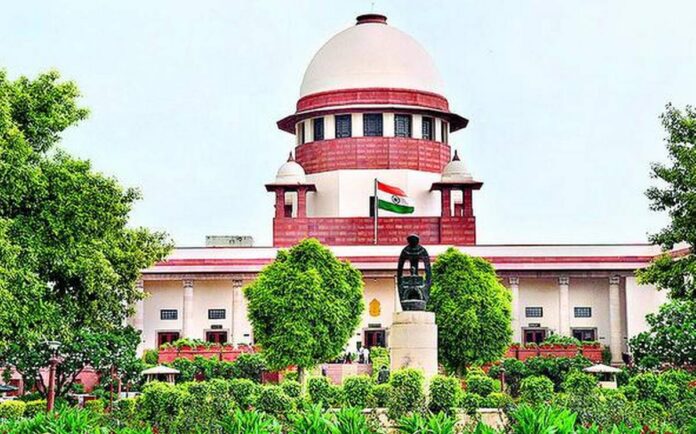
Sri Vijaya Puram, May 26: A nationwide gap in menstrual hygiene infrastructure in schools has come under judicial scrutiny, with the Supreme Court directing all states and Union Territories to implement mandated measures and report compliance by August 15.
The directive was issued by a Bench of Justice J.B. Pardiwala and Justice R. Mahadevan in New Delhi while reviewing progress on a public interest litigation concerning menstrual hygiene management in schools. The court indicated that the matter would be taken up again in September to assess compliance status across jurisdictions.
The ongoing proceedings stem from a petition filed by Congress leader Jaya Thakur, through which the apex court has been monitoring the enforcement of its earlier judgment recognising access to menstrual hygiene as a fundamental right. The ruling had mandated provisions such as free sanitary napkins, functional girls’ toilets, awareness programmes and proper sanitary waste disposal systems in schools.
During the hearing, the court examined compliance submissions made by the Union government and took note of concerns raised by the petitioner regarding the pace and effectiveness of implementation at the ground level. The petitioner argued that the Centre’s affidavit lacked field-level verification and relied largely on proposed measures rather than evidence of actual execution.

It was also submitted before the court that several states had not yet filed their compliance reports, with only the Union Territory of Chandigarh having submitted its response so far.
Highlighting the scale of the issue, the petitioner cited a 2026 report by NITI Aayog indicating significant infrastructural deficiencies in government schools. According to the submission, 98,592 schools do not have functional girls’ toilets, while 61,540 schools lack usable toilets entirely.
Concerns were also raised over financial allocation for menstrual hygiene initiatives. The petitioner informed the court that Madhya Pradesh had earmarked Rs 60 lakh for the financial year 2026–27 towards sanitary product distribution in schools across the state, raising questions over adequacy.
The court was further apprised of gaps in sanitation management, with many schools lacking permanent cleaning staff and depending instead on municipal bodies and village panchayats for maintenance.
Earlier, the apex court had granted three months to authorities to implement its directives and had directed the Centre to share a concise status note with all stakeholders after submitting a detailed affidavit on measures taken.

The judicial intervention follows a landmark judgment delivered earlier this year, in which the Supreme Court held that access to menstrual hygiene is integral to the right to life, dignity, health and education under Article 21 of the Constitution.
In its earlier observations, the court had emphasised that lack of menstrual hygiene facilities should not become a barrier to girls’ education, underscoring the need for systemic reforms in school infrastructure.
The Bench had also directed both government and private schools to ensure gender-segregated toilets, water supply, hand-washing facilities, sanitary waste disposal mechanisms and awareness initiatives, along with regular monitoring and inspections.
The matter now remains under active judicial oversight, with compliance reports expected to determine the next course of action.