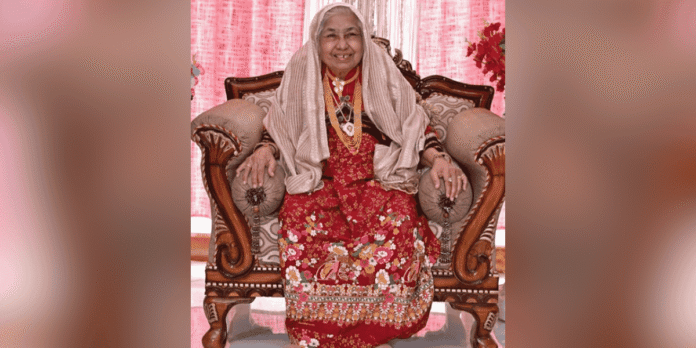
Rani Fathima, the Queen of Nancowry, has turn 100 on January 1, 2026, marking a century since her birth and decades of association with traditional leadership among the Nicobarese communities of the Central and Southern Nicobar Islands.
In an exclusive interaction with The Wave Andaman, Rani Fathima spoke about her life, lineage and role within the Nancowry group of islands. Born on January 1, 1926, in the village of Malacca (Altameak), now known as Champin, she belongs to a long-established line of women leaders associated with customary authority and land stewardship in Nicobarese society.
Rani Fathima is a third-generation queen. She is the daughter of Queen Rani Lakshmi and was raised under the guidance of her grandmother, Queen Islon. Both women are remembered locally for their roles in shaping social organisation, cultural continuity and collective decision-making within the Nicobarese community. These influences played a central role in defining Rani Fathima’s understanding of responsibility from an early age.
Traditional leadership in Nancowry has historically focused on custodianship of land, culture and community welfare rather than political power. Over the years, Rani Fathima has been regarded within the community as a customary authority who provides guidance on social, cultural and communal matters, particularly during periods of transition and uncertainty.
Community elders say her role has also involved the upholding of tribal customary law, including norms governing land use, inheritance, dispute resolution and social obligations. These customary practices, transmitted orally across generations, continue to guide everyday life in the Nicobarese villages of the Nancowry group. Rani Fathima’s interventions, elders note, have largely centred on mediation and consensus, with an emphasis on maintaining social harmony and adherence to established custom.

Her tenure has included instances where land and resources were made available for public use, decisions that community elders describe as significant for long-term welfare. Such actions were undertaken through customary consultations and were intended to support collective needs, including access, settlement and public infrastructure. These decisions continue to be cited locally as examples of leadership rooted in consensus rather than individual authority.
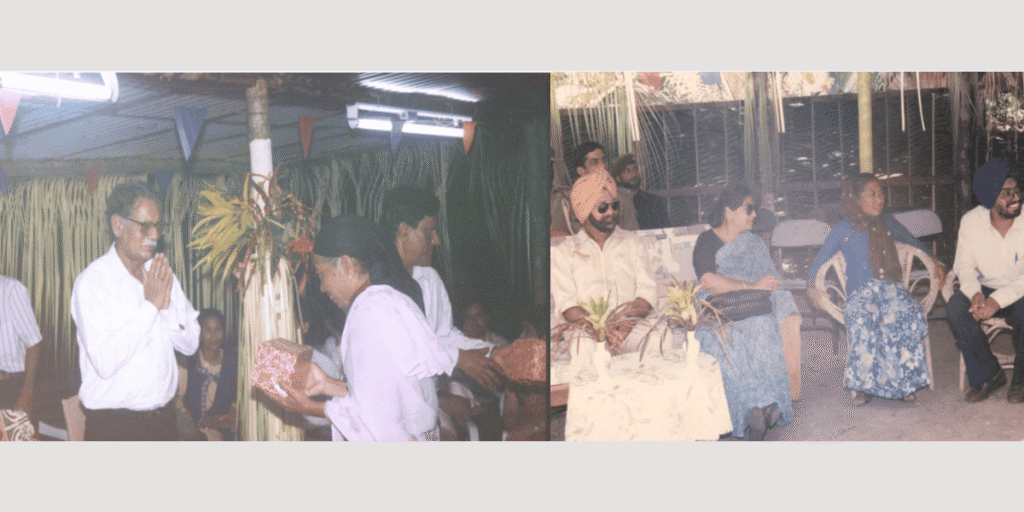
Rani Fathima has also interacted with representatives of the government. In 1997, she was visited at Nancowry by then Lieutenant Governor Iswari Prasad Gupta, an engagement remembered locally as official recognition of traditional leadership institutions. She has also received invitations to visit naval vessels, interactions that reflected periodic engagement between customary authorities and state institutions operating in the Nicobar region.
The lineage she represents dates back to the British period, when her grandmother, Queen Islon, was formally acknowledged as “Queen” in view of her authority, land stewardship and role in maintaining unity among the Nicobarese people. That recognition is widely regarded as having formalised an already well-established customary position within the community.

Her mother, Queen Rani Lakshmi, who passed away on November 12, 1989, continued this tradition of leadership, focusing on internal cohesion and adaptation during a period of social and administrative change. Following her mother’s death, Rani Fathima assumed the role, maintaining continuity in customary practices while navigating evolving governance structures in the islands.
Members of her family continue to be associated with community life. Her elder daughter Rani Aysha and youngest son Prince Rashid are involved in efforts to uphold customary practices, cultural observances and community responsibilities, while also responding to changing social conditions and generational shifts.
As she approaches her centenary, Rani Fathima’s life reflects the endurance of traditional leadership structures within Nicobarese society and their continued relevance within the evolving administrative and social framework of the Andaman and Nicobar Islands.