By The Wave Andaman Editorial Team
Sri Vijaya Puram, like everyone else across these islands, we at The Wave Andaman are frustrated. Tired. Angry.
It’s the year 2025, and yet power cuts in the Andaman and Nicobar Islands have become so routine that one wonders if we’ve simply given up expecting anything better. In a nation that speaks of digital transformation, lunar landings, and green hydrogen, it’s a cruel irony that a territory of such strategic, ecological, and cultural significance still struggles with something as basic as uninterrupted electricity.
Despite repeated appeals by Members of Parliament, PRI members, civil society voices, and even some within the administration, the situation remains unchanged. Generators hum louder than the promises made. Children struggle to study, small businesses take a hit, patients suffer, and daily life is reduced to a guessing game of when the lights will go out next.
While we continue to demand accountability and long-term infrastructure reform, The Wave Andaman also believes in coping creatively. If darkness is here to stay, for now, how do we live through it, together?
Here’s our humble four-point survival guide:
1. Kissa Goi: When There’s No Current, Share the Current of Stories
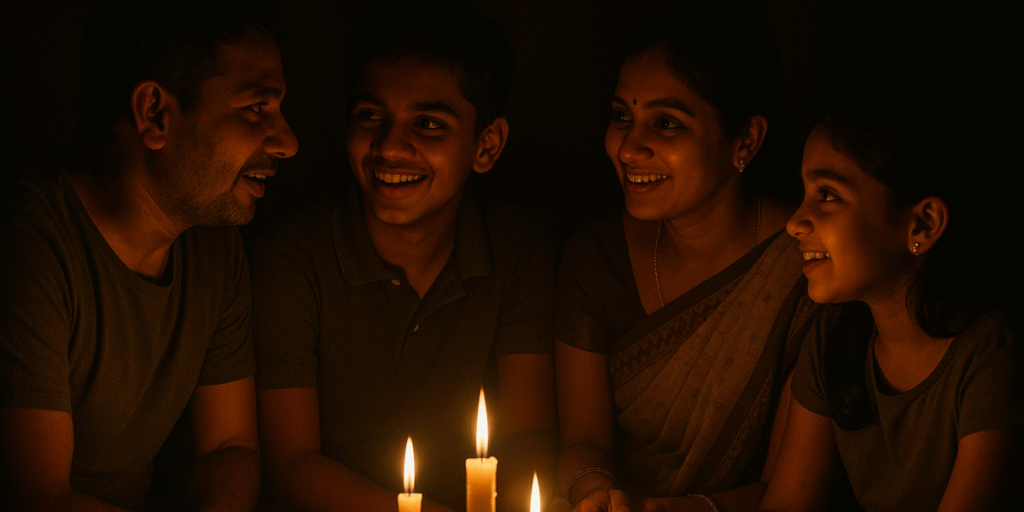
In a recent public address, the Hon’ble Chief Secretary encouraged the revival of Kissa Goi, the timeless tradition of oral storytelling. In the old days, when power and mobile networks were non-existent, families would gather under lanterns and exchange tales that passed from one generation to the next.
Perhaps it’s time to bring that back.
Instead of sitting alone in frustration, why not gather with your family, neighbours, or children and share stories, of your forefathers who came here after Partition, of the indigenous tribes who lived in harmony with nature, or of the Battle of Aberdeen and the resistance against colonial powers?
These are not just bedtime fables, they are acts of remembering. Our islands are full of oral histories that rarely find space in books, yet shape who we are. Telling them is an act of both defiance and preservation.
No inverter needed. Just a voice, and a listener.
2. Look Up, The Power Cut is Also a Celestial Invitation
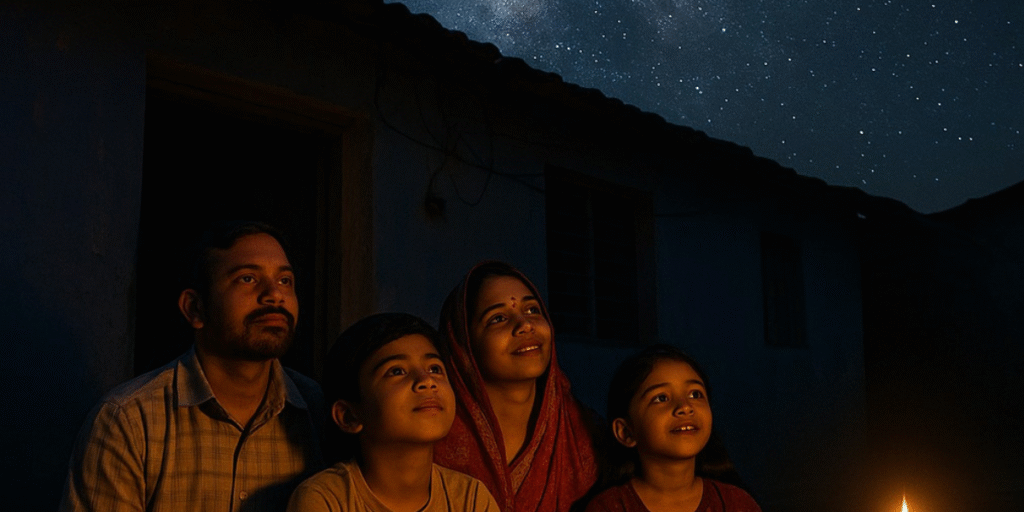
You might not find your ceiling fan spinning at night, but look outside and you’ll see something even more beautiful, an unpolluted, starlit sky that many in mainland India can only dream of.
With power outages plunging entire towns into darkness and minimal artificial lighting outside city limits, the islands become a natural observatory. From Ferrargunj to Diglipur, and even the hills of Shoal Bay or the beaches of Collinpur and Kalipur, the views of the night sky are breathtaking.
This is a stargazer’s paradise. Constellations come alive. Satellites blink past. If you’re lucky on a new moon night, you can even see the ghostly river of the Milky Way stretch across the sky.
Instead of doom-scrolling on your phone or cursing the EB lines, step out. Let the universe remind you that there’s something far bigger than an electricity bill, and far more constant.
3. Walk It Off, But Stay Street Smart
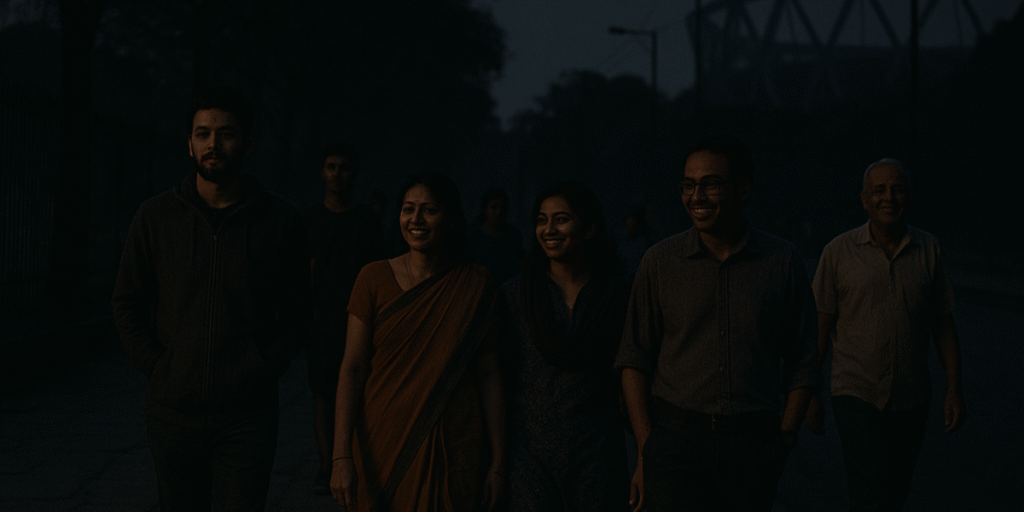
The electricity’s gone. Tempers are high. The walls are closing in. Time to get moving.
Even a brisk walk down familiar stretches can help reset the mind and lift your spirits. Sri Vijayapuram may not be a walker’s city yet, but crumbling pavements, poor street lighting, and unmarked crossings make it difficult; there are still places where one can reclaim public space.
Start at Marina Park, or take a loop around Netaji Stadium. Head towards Corbyn’s Cove in the early evening, or stroll through the bylanes of Brichgunj and Nayagaon. Walking is not just exercise, it’s a form of soft protest, a way to say “life goes on, regardless.”
That said, a word of caution. If you’re walking with a friend of the opposite gender, especially late evening, be prepared to be stopped. The Pink Patrol units in town are doing important work to ensure women’s safety, but reports suggest that their questioning can sometimes feel excessive, even invasive.
So carry ID, stay calm, and know your rights. Do not compromise on your right to public space; just be alert.
4. Laugh Through the Blackout
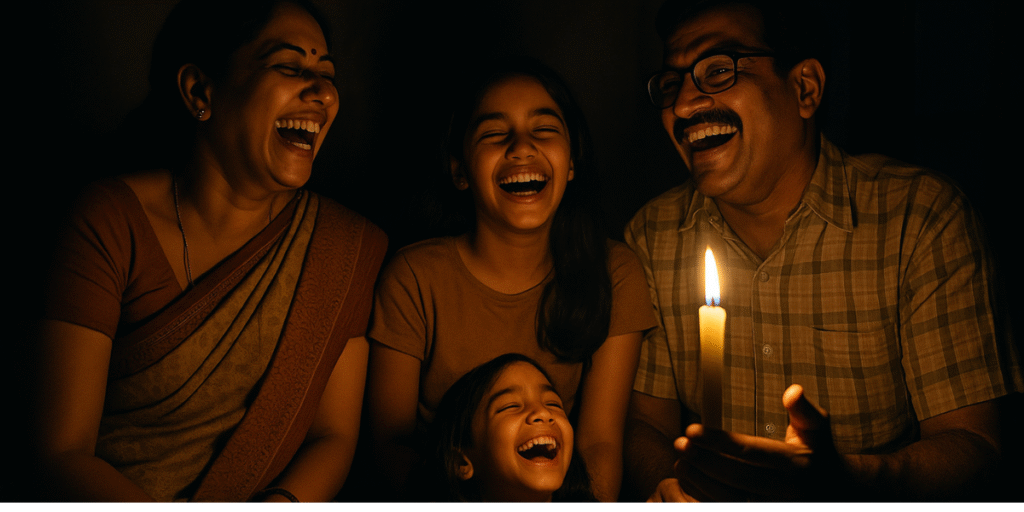
Sometimes, the only thing left to do is laugh.
Andamanis have always been known for their sense of humour, cutting, dry, and often dark. The power situation has become so absurd that it practically begs to be turned into a meme.
“Power supply in Andaman is like true love, rare, unreliable, and often announced after it’s gone.”
Share a joke. Laugh with your family. Turn the frustration into comic relief. Satire and humour have always been ways to cope with broken systems, and we see no reason to stop now.
When there’s no power, there’s still punchlines. Let’s use them.
The Light at the End of the Tunnel.
To be clear, we are not making peace with mediocrity. The residents of Andaman and Nicobar deserve a modern, resilient power system. Not excuses about diesel shipments. Not patchwork solutions. Not lip service about green grids and underwater cables that never seem to arrive.
But while we continue to raise our voices for accountability, perhaps it’s also time to reclaim our nights. Through stories. Through stars. Through movement. Through laughter.
Let the administration do its job. And until they do, let us do ours, with dignity, creativity, and stubborn joy.
Because here in the Andamans, the lights may go out. But our spirit never does.