Sri Vijaya Puram, May 19: The Centre on Sunday signed a reform-linked Memorandum of Understanding with the Andaman and Nicobar Administration under Jal Jeevan Mission 2.0, marking a major step towards community-led rural water governance and long-term drinking water sustainability in the islands.
The agreement was signed between the Department of Drinking Water and Sanitation under the Ministry of Jal Shakti and the Union Territory Administration as part of the nationwide rollout of reform-linked implementation under Jal Jeevan Mission 2.0.
Officials said the MoU seeks to strengthen transparent, accountable and community-centred rural water supply management aligned with the Centre’s broader Viksit Bharat @2047 vision.
The agreement mandates a Gram Panchayat-led and service-based model of rural water governance, with greater responsibility placed on local village institutions for operation, maintenance and long-term sustainability of drinking water systems.

The MoU signing took place during a meeting chaired by Union Jal Shakti Minister C.R. Patil in the presence of Minister of State for Jal Shakti V. Somanna, Secretary of the Department of Drinking Water and Sanitation Ashok K.K. Meena and senior officials of the Ministry.
For the Andaman and Nicobar Islands, the agreement was signed between Swati Meena Naik, Joint Secretary (Water), Department of Drinking Water and Sanitation, and Dr. Sachin Shinde, Secretary and Commissioner-cum-Secretary of the Union Territory Administration.
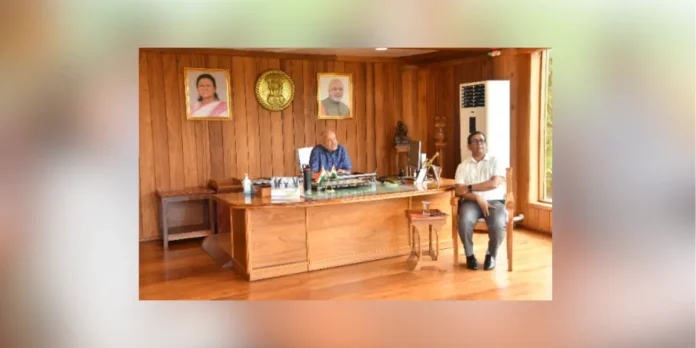
The agreement was exchanged at the Department of Drinking Water and Sanitation office in New Delhi in the virtual presence of Lieutenant Governor Admiral D.K. Joshi and Chief Secretary Dr. Chandra Bhushan Kumar along with senior officials of the Administration.
During the meeting, Union Jal Shakti Minister C.R. Patil said Jal Jeevan Mission had evolved into a people-centric movement aimed at improving dignity, health and quality of life in rural India.
He stated that although the original target under the mission was May 2024, the timeline had now been extended till December 2028 with the objective of ensuring complete tap water coverage and sanitation across the country.
The Minister commended the Andaman and Nicobar Islands for achieving 100 percent rural household tap water coverage in 2021 and obtaining “Har Ghar Jal” certification across all blocks.
He also appreciated the Administration for fully funding financial requirements for 40 percent of the remaining water infrastructure works under the programme.
However, the Minister urged the Administration to complete financial reconciliation of ongoing schemes to maintain accounting transparency.
Patil further stressed that village-level operation and maintenance responsibilities must be structurally transferred to Village Water and Sanitation Committees, including authority over local infrastructure management and water tariff collection.
Officials said the reforms under Jal Jeevan Mission 2.0 are intended to move rural water supply systems away from centrally dependent infrastructure models towards locally managed and community-owned systems.
Addressing the gathering, Lieutenant Governor Admiral D.K. Joshi highlighted the unique vulnerabilities of the Andaman and Nicobar Islands, noting that the islands lack extensive river systems and permanent inland freshwater sources.
He said the islands remain largely dependent on rainwater harvesting into localised reservoirs for drinking water supply.
The Lieutenant Governor also informed the Ministry that decentralised trial runs for community-led infrastructure management under Jal Jeevan Mission 2.0 had already begun in the islands.
According to officials, a pilot project implementing the new governance framework has been completed in Sippighat Gram Panchayat.

The Lieutenant Governor said the Administration had successfully completed the initial phase of Jal Jeevan Mission and utilised the allocated budget for 40 completed rural water projects across the islands.
He also sought continued central support for strengthening vulnerable water supply systems in the geographically isolated island territory.
Secretary of the Department of Drinking Water and Sanitation Ashok K.K. Meena said the MoU represented a shared commitment between the Centre and the Administration for ensuring safe and sustainable drinking water access to every household.
He stated that Gram Panchayats would now play a greater role in management of village water systems and collection of water taxes for long-term sustainability.
The Administration believes the reform-linked framework will strengthen local participation, improve maintenance standards and support long-term drinking water security in the islands.