Sri Vijaya Puram, May 19: National Dengue Day was observed across the Andaman and Nicobar Islands with health authorities conducting awareness programmes focused on vector control, sanitation and community participation in preventing dengue outbreaks.
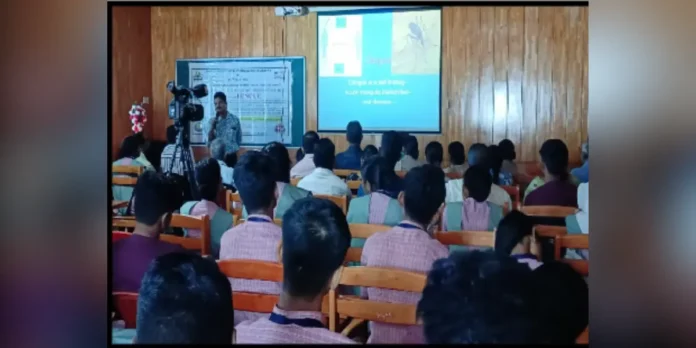
An inaugural programme was organised at the Bio-Chemistry Demonstration Room of ANIIMS in Sri Vijaya Puram in coordination with the UT Health Mission and the Directorate of Health Services under the theme, “Community Participation in Dengue Control: Check, Clean and Cover.”
Director of Health Services and Joint Managing Director of the National Health Mission Dr. H.M. Siddaraju, who attended the programme as chief guest, thanked students and participants for their cooperation in reducing dengue incidence in the islands and stressed that vector control remains a shared public responsibility.

Officials highlighted the need for collective action in preventing mosquito breeding through cleanliness drives, proper waste disposal and elimination of stagnant water sources in residential and public areas.
Deputy Director (Malaria) and Joint Secretary of the National Vector Borne Disease Control Programme Dr. B. Ajit Kumar delivered a detailed presentation on dengue-transmitting mosquitoes and vector bionomics.
He urged students and residents to actively identify mosquito breeding spots and larvae-containing water storage containers in and around their homes.
Participants were also advised to observe weekly “Dry Days” by emptying and cleaning water containers at least once every week to prevent mosquito breeding.
Deputy Director (Health) Dr. Avijit Roy emphasised the importance of early diagnosis, prompt treatment and sustained vector control measures in reducing dengue transmission and preventing severe illness.
Health officials said public participation remains critical in controlling dengue outbreaks, particularly during periods of increased rainfall and humidity which create favourable conditions for mosquito breeding.
The awareness programme included interaction sessions aimed at educating students and the public about preventive practices, early symptoms and the importance of maintaining hygienic surroundings.
Officials said educational institutions continue to play a significant role in spreading awareness and encouraging behavioural changes related to vector-borne disease prevention.

The Directorate of Health Services has been conducting regular awareness campaigns, vector surveillance activities and sanitation outreach programmes across the islands as part of ongoing dengue prevention measures.
Authorities reiterated that simple preventive practices such as covering water storage containers, avoiding water stagnation and maintaining cleanliness can significantly reduce mosquito breeding and disease transmission.
The programme concluded with an appeal to residents to actively cooperate with health authorities and participate in community-led initiatives aimed at controlling dengue and other vector-borne diseases across the islands.