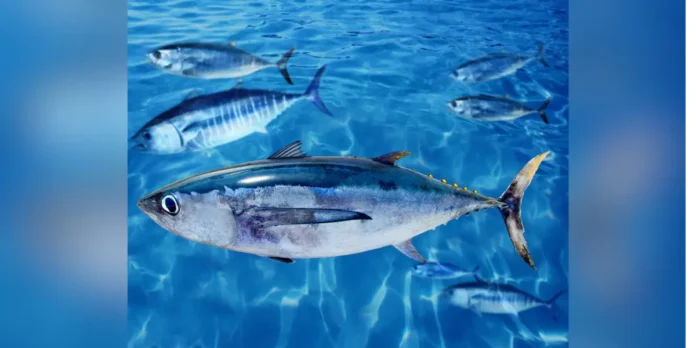
Sri Vijaya Puram, April 23: Despite being home to one of India’s largest tuna reserves, the Andaman and Nicobar Islands continue to harvest only a small share of their potential, with slow progress in infrastructure and capacity-building keeping fishers from fully benefiting from the resource-rich waters around them.
The islands have an estimated annual tuna potential of 64,500 metric tonnes, but actual landings remain limited to around 4,000 to 6,000 tonnes. The large gap has persisted for years, reflecting not just underutilisation of marine wealth but also the slow pace at which the supporting ecosystem for deep-sea fishing and export-oriented fisheries has developed.
Spread across an Exclusive Economic Zone of nearly 600,000 sq km, the islands are rich in commercially valuable species such as yellowfin, skipjack, bigeye and neritic tuna. Yet much of the local fishing fleet continues to rely on small boats and traditional gear such as gillnets and handlines, restricting operations to nearshore waters and keeping deeper, higher-value tuna stocks beyond reach.

That limitation has had a direct impact on livelihoods. Without larger vessels, onboard preservation systems and a stronger supply chain, fishers are often forced to depend on smaller catches and lower-value sales. The absence of an efficient system to handle export-grade tuna has meant that higher incomes from premium domestic and overseas markets have remained out of reach for many fishing communities.
The slow expansion of post-harvest infrastructure remains a major concern. The islands currently operate four cold storage facilities with a combined capacity of around 2,210 metric tonnes across Port Blair and parts of North and Middle Andaman. While these include facilities run by private operators and a recently added unit at Subhashgram, the total capacity remains inadequate in relation to both the islands’ tuna potential and even existing landing volumes.
Recognising the scale of the gap, the Department of Fisheries designated the Andaman and Nicobar Islands as the country’s first Tuna Cluster under the Pradhan Mantri Matsya Sampada Yojana in November 2024. The project, with an outlay of Rs 58.91 crore including a central share of Rs 31.48 crore, was meant to support the creation of landing centres, processing units and cold-chain infrastructure, including additional storage and ice plant facilities.
But nearly a year and a half later, the pace of implementation remains gradual, with the benefits yet to be felt widely on the ground. Much of the planned infrastructure is still under development, while access to advanced fishing technology remains limited for a large section of fishers.
The slow pace of progress is also evident in the continued calls for basic capacity-building. In October 2025, a fisherman from the islands raised the need for dedicated deep-sea fishing training facilities during an interaction with Prime Minister Narendra Modi, underlining that the sector still lacks the skills ecosystem needed to unlock the islands’ marine potential.
This is significant because the Andaman and Nicobar Islands enjoy a natural logistical advantage. Their proximity to Southeast Asian markets offers the possibility of quicker sea and air access for seafood exports, fitting into India’s broader effort to push value-added marine exports. Training programmes on onboard handling are also being conducted through the Marine Products Export Development Authority, but these efforts have yet to translate into a visible transformation of the sector.

The islands’ slow progress has also drawn attention at the national level. At the Seafood Exporters Meet 2026 in New Delhi, Union Minister Rajiv Ranjan Singh identified the Andaman and Nicobar Islands as a key region for expanding India’s tuna exports. He said improvements in onboard handling, cold-chain logistics, packaging and value addition were necessary to cut post-harvest losses and meet international quality standards. He also stressed the need for stronger regulatory compliance and traceability to improve competitiveness in global markets.
The Wave Andaman has written to the Department of Fisheries, Andaman and Nicobar Islands, seeking details on the current status of Tuna Cluster implementation and related initiatives.
If the current plans are executed effectively, the islands could eventually see a major rise in fisher incomes and a stronger fisheries value chain. For now, however, slow progress on infrastructure and capability-building continues to keep one of India’s richest tuna zones operating far below its potential.