New Delhi, Nov 7: Drug traffickers are increasingly exploiting India’s postal and courier networks to distribute narcotics through thousands of small consignments, using fake identities, false sender addresses and concealed packaging to evade law enforcement surveillance. A recent operation by Tamil Nadu Police has exposed a distribution network that allegedly moved drugs from Ambala to 19 states and Union Territories, highlighting the growing challenge of detecting high-volume, low-quantity narcotics shipments.
The operation, conducted under Operation Deep Source, revealed how traffickers have adopted micro-dosing, a method in which each parcel carries only a few grams of narcotics. According to officials, operators send out thousands of consignments from multiple locations, limiting the quantity lost if authorities intercept an individual shipment while making it harder to identify the wider supply chain.
Officials estimate that drug traffickers dispatch at least 1,000 postal and courier consignments daily from different parts of the country, with each package carrying approximately 5–20 grams of narcotics. The cumulative volume of these shipments has emerged as a major concern for enforcement agencies.

Investigators found that traffickers use fabricated identities and false sender addresses to conceal the origin of parcels. They also direct shipments towards smaller towns and remote villages, where screening facilities remain limited compared with those in major cities. Once the consignments reach their destinations, local operatives collect the drugs and arrange their further distribution through courier networks.
The Tamil Nadu Police investigation traced parcels dispatched from Ambala over the past year to destinations across 19 states and Union Territories. Police identified Mahender Singh Bisht as the alleged key coordinator operating from Ambala, while Sunil Kumar, based in Jammu and Kashmir, allegedly facilitated the distribution of supplies to different states.
An Intelligence Bureau official said traffickers prefer public postal systems because their Know Your Customer (KYC) requirements are less stringent. After a parcel reaches its destination, recipients use burner phone numbers to contact delivery personnel and arrange collection at public locations rather than disclose their physical addresses.
Investigators have also identified deep concealment as another method used by these networks. Instead of sending narcotics in their raw form, traffickers hide substances inside everyday consumer products. Recent enforcement operations uncovered MDMA, hashish and opioids concealed inside steam irons and religious offerings.

The networks also target rural post offices that lack advanced parcel-screening equipment and digital infrastructure. In response, the government has directed private logistics companies to strengthen item scanning, enforce mandatory KYC validation and verify parcels.
Officials said the shift towards decentralised distribution networks presents a different enforcement challenge from larger trafficking operations involving supplies from Pakistan, Myanmar and Mexico. While agencies continue to target these international networks, smaller consignments spread across numerous locations make detection and interception more difficult.
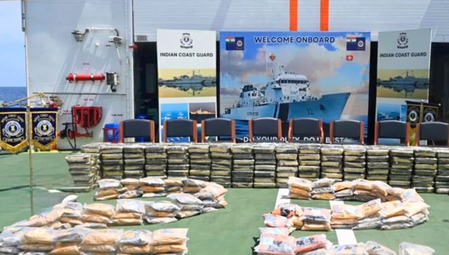
The Narcotics Control Bureau (NCB), Indian Coast Guard and state police have conducted operations against several narcotics modules. Border forces are also continuing efforts to intercept drones allegedly used to drop drugs from Pakistan into Jammu and Kashmir and Punjab.
The NCB has increasingly focused on dismantling supply chains, identifying alleged masterminds and pursuing extradition requests rather than limiting investigations to arrests. Officials said sustained enforcement would remain necessary to address the evolving methods used by narcotics networks.