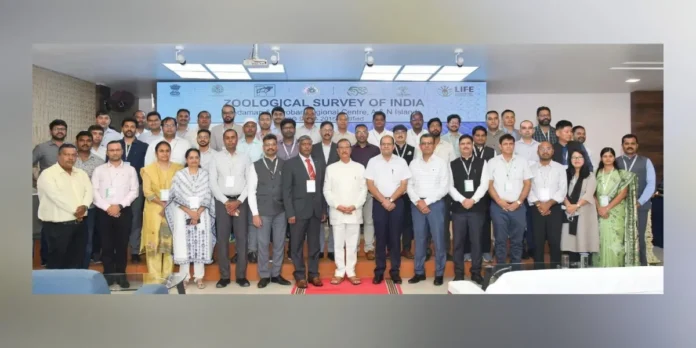
Sri Vijaya Puram, Oct. 13: A one-week mandatory training programme for Indian Forest Service (IFS) officers on coastal and marine biodiversity of island ecosystems was inaugurated in Sri Vijaya Puram on October 12, with a focus on strengthening scientific understanding, conservation practices and sustainable management of the Andaman and Nicobar Islands’ distinctive natural environment.
Organised by the Andaman and Nicobar Regional Centre of the Zoological Survey of India (ZSI), the programme is being held at Mansha Regency, Phoenix Bay. IFS officers from different parts of the country have arrived to participate in the training.
The programme focuses on the conservation of coastal and marine ecosystems in the archipelago, which is known for its rich biodiversity and ecologically significant island habitats. It seeks to highlight the importance of scientific research, modern conservation practices and capacity building in improving the effectiveness of biodiversity protection.

The inaugural session emphasised the need for sustainable management of natural resources and the maintenance of ecological balance. Strengthening the technical knowledge of officers was identified as an important element in improving conservation efforts.
Island ecosystems present distinctive management requirements because coastal habitats, marine environments and terrestrial ecosystems are closely interconnected. Conservation planning must account for these ecological relationships while considering the effects of human activities and the need for sustainable use of natural resources.
The Andaman and Nicobar Islands’ coastal and marine environments make biodiversity conservation an important aspect of environmental management in the Union Territory. Scientific studies and improved technical understanding can help officials make informed decisions on habitat protection, resource management and conservation priorities.
The training programme provides an opportunity for officers to familiarise themselves with the ecological characteristics of island environments and the scientific approaches used to study and protect them. The emphasis on modern conservation practices is intended to support more effective decision-making and strengthen institutional capacity.
The inaugural address also highlighted the role of research in understanding biodiversity and improving conservation outcomes. Scientific assessment can help identify ecological pressures, establish conservation priorities and support the development of management strategies suited to specific habitats.
The programme was attended by Dr. C. Sivaperuman, scientist at the Zoological Survey of India; Raj Kumar, Additional Principal Chief Conservator of Forests; the Deputy Commissioner, South Andaman; the Chief Conservator of Forests; the Superintendent of Police; the president of the Andaman Association of Tour Operators; and other dignitaries.
The participation of representatives from the Forest Department, district administration and tourism sector also reflects the relevance of biodiversity conservation to several areas of public administration and economic activity.

Coastal and marine ecosystems are important not only for biodiversity but also for the communities and economic activities connected with the islands’ natural environment. Effective conservation requires scientific understanding as well as coordination among departments responsible for environmental protection, development and tourism.
The training is intended to improve officers’ understanding of the challenges involved in managing island ecosystems and the methods available to address them. Its long-term effectiveness will depend on how the knowledge acquired is incorporated into field-level conservation practices, environmental planning and the management of ecologically sensitive areas.
The programme forms part of efforts to strengthen professional capacity in biodiversity conservation and promote the sustainable management of the archipelago’s coastal and marine resources.