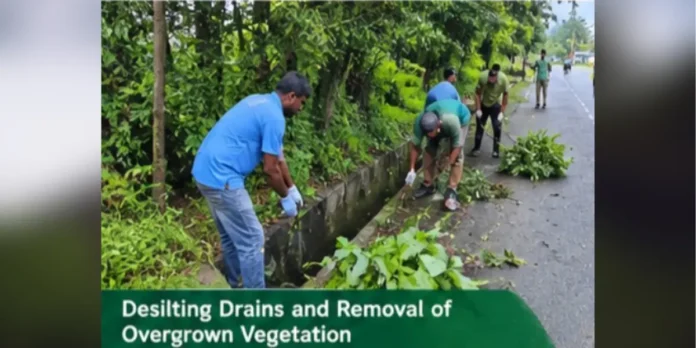
Sri Vijaya Puram, Sept. 24: Sanitation activities under the Swachhata Hi Seva 2026 campaign have expanded across nine blocks of the Andaman and Nicobar Islands, bringing cleanliness drives, waste-management awareness and community participation to public spaces and educational institutions.
The campaign, being observed from September 17 to October 2, has been implemented by the Directorate of RD, PRIs & ULBs across Campbell Bay, Car Nicobar, Ferrargunj, Mayabunder, Prothrapur, Nancowry, Little Andaman, Rangat and Diglipur. The activities have involved students, SafaiMitras, officials, PRI representatives and community members.
On Day 7 of the campaign, activities were organised under several Swachhata Hi Seva pillars, including Safai Mitra Suraksha evam Samman Shivir, Transformation of CTUs & Public Spaces, Jan Bhagidari and Swachh Pathshala. More than 450 participants took part in the day’s programmes across the participating blocks.

The programme included cleanliness drives and rallies, distribution of information, education and communication material, awareness sessions on four-way source segregation, student outreach and quiz competitions. The activities also placed emphasis on Safai Mitra welfare, improving public spaces, youth participation and responsible handling of waste.
Separately, activities under the Swachh Pathshala for Yuva pillar were conducted in Prothrapur, Mayabunder, Rangat, Ferrargunj, Car Nicobar and Campbell Bay. These programmes carried forward the campaign message, “Swachhata Se Samriddhi,” while engaging young participants in sanitation-related activities.
The campaign has also used community participation as a key component of its island-wide activities, bringing together local residents and institutional stakeholders alongside sanitation workers and government personnel.
The Directorate’s programmes are part of the Swachhata Hi Seva 2026 campaign, which will continue until October 2. The activities across the blocks focus on cleanliness, public-space improvement, awareness and participation, with particular attention to youth engagement, sanitation-worker welfare and source segregation.