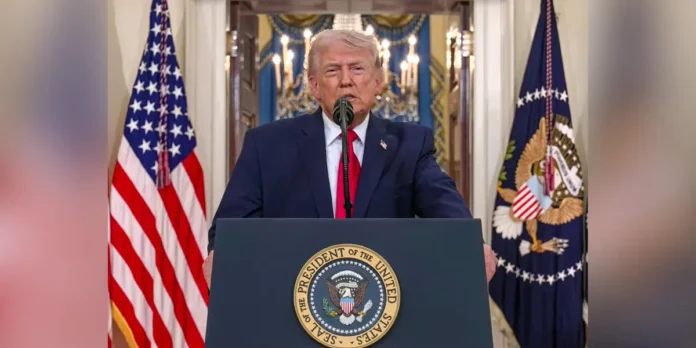
New York, April 22: US President Donald Trump has extended the ceasefire with Iran indefinitely, just hours before its scheduled expiry, after Tehran declined to participate in a second round of negotiations, intensifying diplomatic uncertainty over ongoing regional tensions.
The decision was announced as Washington maintained pressure on Tehran, even as planned talks failed to materialise. The extension came despite earlier indications that the ceasefire would not be prolonged and amid conflicting signals over the direction of negotiations.
Trump, in a post on his social media platform, stated that Iran’s internal divisions had led to the extension of the ceasefire until it presents a unified position. He also linked the decision to ongoing naval restrictions affecting Iranian ports, which remain a central point of contention in the standoff.

Earlier in the day, he had suggested in a media interview that military action remained an option if a settlement was not reached. However, the extension signalled a temporary pause in escalation while diplomatic efforts remain stalled.
The situation has also been shaped by Iran’s refusal to attend talks scheduled in Islamabad, with Iranian state-linked outlets confirming that no delegation would participate. Pakistani officials later acknowledged the absence of Iranian representatives from the planned discussions.
Reports indicated that Iran conveyed its position through a third-party channel, stating that it would not engage in negotiations under pressure. Tehran has also insisted on the lifting of naval restrictions, warning that continued blockade conditions would amount to sustained hostilities.
The dispute centres on maritime access routes, including the Strait of Hormuz, through which a significant share of global oil and gas flows. Iranian sources have warned that access would remain restricted unless sanctions and naval pressures are lifted.
At the same time, internal divisions within Iran’s leadership structure have added complexity to the crisis, with competing positions emerging between political and military factions. Hardline elements have maintained a strong stance on maritime control and negotiations.

The broader diplomatic effort has involved indirect channels, with external mediators facilitating communication between the two sides. However, no breakthrough has been achieved, and both parties remain firm on core demands.
In the United States, the unfolding situation has also drawn domestic attention, with public opinion divided over continued military involvement. Economic concerns linked to global energy disruptions have further added to political pressure ahead of upcoming elections.
The ceasefire extension has temporarily prevented immediate escalation, but key issues remain unresolved, including maritime access, sanctions, and the framework for any future negotiations.