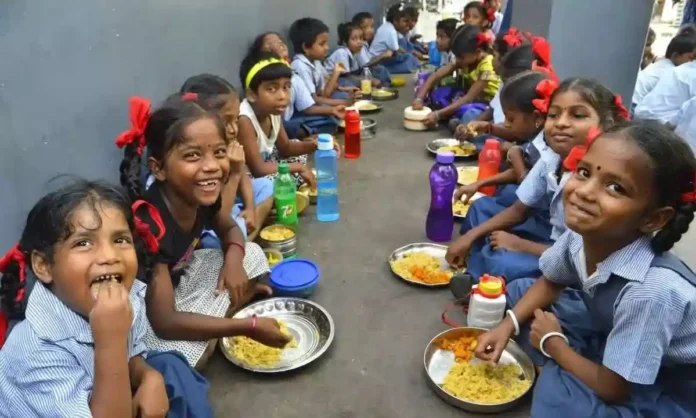
The Tamil Nadu government has issued a comprehensive Standard Operating Procedure (SOP) for extending the Perunthalaivar Kamarajar Breakfast Scheme to students of Classes 6 to 8 in government and aided schools, laying down uniform guidelines on food preparation, staffing, hygiene, monitoring and quality control ahead of the programme’s expansion.
The SOP, released by the Tamil Nadu Women Development Corporation, outlines the operational framework for implementing the expanded scheme while ensuring consistency, food safety and accountability across participating schools.
Under the guidelines, breakfast will be prepared and served by selected members of self-help groups (SHGs) associated with the State Rural Livelihoods Mission. Eligible applicants must have at least three years of experience as SHG members, reside in the same village or town panchayat where the school is located, possess basic cooking skills and have children studying in the respective school.

The SOP specifies that selected SHG members should have completed at least Class 10. However, the minimum educational qualification has been relaxed to Class 8 for applicants from hilly, tribal and remote areas.
Applicants must also own an internet-enabled Android smartphone and maintain a satisfactory record in repaying bank or federation loans.
Before the expanded programme begins, all selected SHG members must undergo training in cooking practices, food safety, hygienic food handling, register maintenance and data submission through the scheme’s mobile application. Training on the approved breakfast menu must be completed at least 15 days before implementation.
The operational schedule has also been standardised. Cooking is to begin at 6 a.m. and conclude by 8 a.m., with breakfast served hot between 8 a.m. and 9 a.m. After service, utensils are to be cleaned, and workers are expected to leave the school premises by 9.30 a.m.

The SOP also regulates procurement of ingredients. Rice, pulses, cooking oil and salt cannot be purchased locally and must be supplied through the Tamil Nadu Civil Supplies Corporation. Vegetables, however, may either be sourced locally or grown in school and panchayat gardens.
For schools with fewer than 10 students, meals may be supplied from nearby larger cooking centres. SHG members assigned to distribute breakfast to such schools will receive a distribution charge of Rs 1,500.
To maintain quality standards, the government has mandated daily maintenance of registers, photographic reporting through the scheme’s mobile application, preservation of food samples, regular inspections, independent evaluations and social audits. These measures are intended to ensure hygiene, transparency and accountability as the breakfast scheme is expanded to benefit students in Classes 6 to 8 across the state.