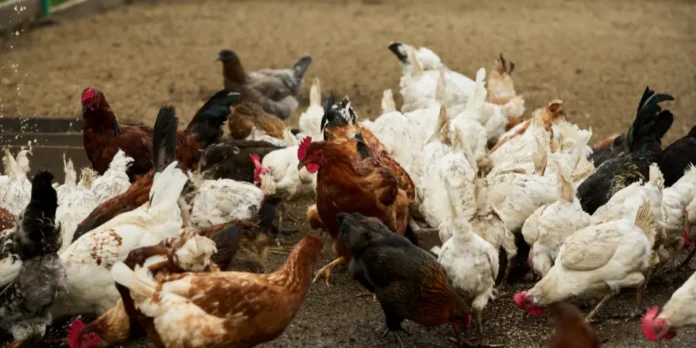
The Department of Animal Husbandry and Veterinary Services has carried out a large-scale distribution of chicks, ducklings, and broiler quails across Shaheed Dweep and Wimberlygunj under its Rotational Distribution Programme, aimed at strengthening backyard poultry farming and supporting rural livelihoods.
At Shaheed Dweep, a total of 600 Vanaraja chicks, 600 ducklings, and 600 broiler quail chicks were distributed among 68 beneficiary farmers. The inclusion of broiler quails marks a diversification effort within the programme, introducing an additional poultry segment to local farming practices.
In a parallel exercise at Wimberlygunj, 350 Vigova ducklings and 180 Vanaraja chicks were distributed to farmers. The distribution is part of an ongoing initiative to expand poultry-based income sources and improve access to livestock resources in rural areas.

Officials indicated that the programme is designed to support self-employment opportunities and supplement household income through small-scale poultry rearing. The introduction of broiler quails is expected to provide an additional option for farmers, given their short rearing cycle and adaptability to limited space conditions.
Vanaraja birds, included in the distribution, are known for their suitability in backyard systems, offering both meat and egg production under low-input conditions. Vigova ducks, also distributed in the programme, are adapted to island environments and are commonly reared in water-based and backyard systems.

The initiative forms part of efforts to promote diversified poultry farming practices across the islands, with an emphasis on improving income generation and nutritional availability at the household level. The rotational model ensures that benefits are extended to different groups of farmers over time, enabling wider participation in the programme.
Authorities stated that such interventions are aimed at strengthening rural economic resilience by encouraging livestock-based activities that require relatively low investment. Backyard poultry farming continues to be identified as a viable supplementary livelihood option, particularly in geographically isolated regions such as the Andaman and Nicobar Islands.
The distribution exercise concluded with the allocation of poultry stock to identified beneficiaries in both locations, with implementation carried out under departmental supervision.