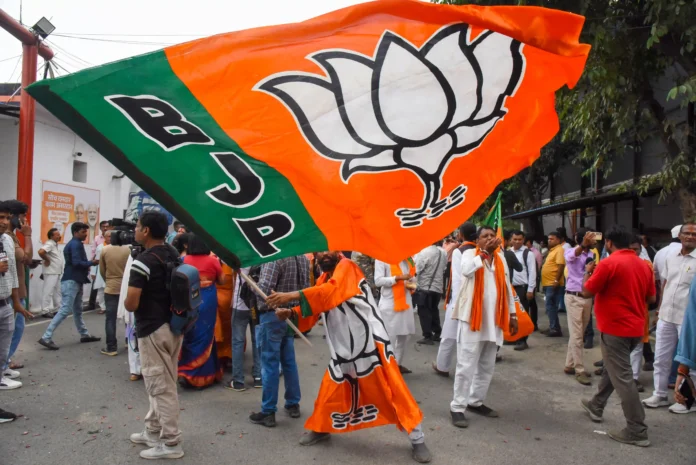
Sri Vijaya Puram, Oct. 30: The BJP secured six of Uttar Pradesh’s 11 seats, while the SP won five, according to the final results reported by IANS. The BJP retained Meerut and Agra Graduate constituencies, while the SP won Allahabad-Jhansi, Lucknow and Varanasi Graduate seats. In the Teachers’ constituencies, the BJP won four seats and the SP two, with the remaining results completing the state’s tally. The outcome highlighted the role of specialised electorates in determining representation in the Legislative Council.
Across all four states, the BJP-led National Democratic Alliance (NDA) won 16 of the 28 seats contested. The BJP won 13 seats, while its allies Janata Dal (United), Janata Dal (Secular) and Shiv Sena secured one each. The SP won five seats, while the opposition also registered victories in Maharashtra and Bihar. In Karnataka, the BJP-JD(S) alliance won all four seats, while the Congress failed to secure a victory. In Bihar, the Jan Suraaj Party entered the Legislative Council after winning the Darbhanga Teachers’ constituency.

Six states have bicameral legislatures
India has six states with two houses in their legislatures: Uttar Pradesh, Bihar, Maharashtra, Karnataka, Andhra Pradesh and Telangana. Alongside the Legislative Assembly, or Vidhan Sabha, these states have a Legislative Council, known as the Vidhan Parishad. The Council acts as a revising chamber, examining legislation and providing an additional forum for debate.
Who elects MLCs?
Unlike Assembly elections, in which eligible voters directly elect MLAs from constituencies, Legislative Council elections follow different procedures depending on the category of seat.
Under Article 171 of the Constitution, approximately one-third of a state’s Legislative Council members are elected by MLAs, one-third by local authorities such as municipalities and district councils, one-twelfth by registered graduates and another one-twelfth by registered teachers. The remaining one-sixth are nominated by the Governor from people with special knowledge or practical experience in fields such as literature, science, art, the cooperative movement and social service.
Uttar Pradesh, for example, has a 100-member Legislative Council. Its composition reflects these different routes of representation, bringing elected representatives, local bodies, graduates, teachers and nominated members into the legislative process.
Six-year terms and staggered elections
MLCs serve six-year terms, but the Council is a continuing body and is not dissolved all at once. Approximately one-third of its members retire every two years, allowing vacancies to be filled through periodic elections or nominations.
The October 23 elections covered 28 seats in the four states, all from graduate and teachers’ constituencies. Voting was conducted using ballot papers, with eligibility restricted to registered voters belonging to the relevant electoral categories.

What powers does the Legislative Council have?
The Council can examine ordinary bills passed by the Legislative Assembly, recommend amendments and delay legislation within constitutional limits. However, it cannot permanently block an ordinary bill when the Assembly follows the prescribed procedure.
Its powers over Money Bills are more restricted. Such bills can be introduced only in the Legislative Assembly. The Council may recommend changes but must return a Money Bill within 14 days, and the Assembly can accept or reject its recommendations.
The Legislative Council therefore provides an additional layer of legislative scrutiny, but the Assembly retains the decisive role in the state lawmaking process.