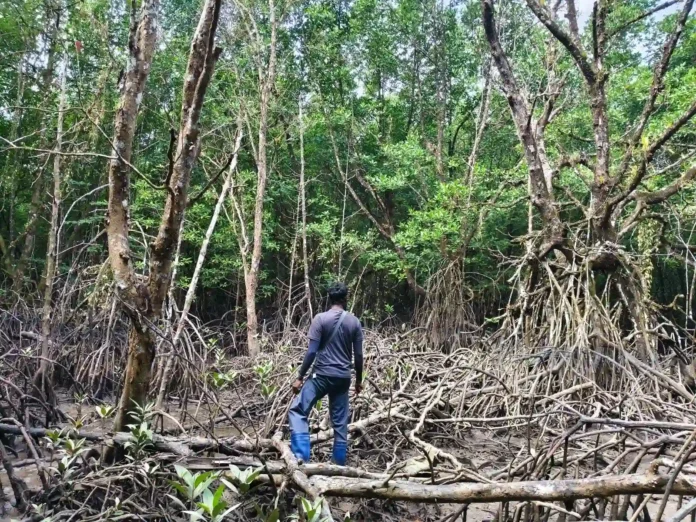
Sri Vijaya Puram, November 6: Lightning strikes in the Andaman and Nicobar Islands’ mangrove forests are creating natural regeneration zones that support a greater diversity of plant species during the early stages of forest recovery, according to a study by the Wildlife Institute of India (WII). The findings highlight how small-scale natural disturbances influence vegetation diversity and long-term forest structure in mangrove ecosystems.
The study found that lightning-induced tree mortality creates small- to medium-sized openings in otherwise dense mangrove canopies, allowing more sunlight to reach the forest floor and providing conditions for different plant species to establish. However, this diversity declines as the gaps age and species better adapted to mangrove conditions gradually dominate the recovering vegetation.
Researchers examined vegetation recruitment and canopy gap characteristics across six sites in the Andaman Islands. They assessed 40 canopy gaps, divided equally between newly formed gaps aged one to six years and recovering gaps aged seven to 15 years. Each gap was compared with a control plot in an undisturbed section of the forest.

The recorded canopy gaps ranged from 270 square metres to 2,463 square metres. The study also found that water temperature increased with canopy openness, while water pH and salinity showed no significant relationship with the presence of canopy gaps.
Plant species richness was highest in newly formed gaps and declined as the vegetation progressed through successive stages of recovery. Seedling and sapling densities in the newer gaps were twice those recorded in intact mangrove forests, indicating greater plant recruitment in areas where tree cover had been disturbed.
Rhizophora apiculata Blume, a tall stilt-rooted mangrove species, emerged as the dominant vegetation across all sampling categories.
The researchers attributed the changing species composition to competition during forest regeneration. While newly opened gaps allow a wider range of plants to establish, species adapted to the specific conditions of seaward mangrove zones gradually outcompete other vegetation as the canopy develops.
Previous studies have documented how clustered tree mortality in dense forests creates openings that expose the forest floor to increased sunlight. Such changes can alter local environmental conditions, including light availability, temperature, soil moisture and nutrient dynamics, compared with surrounding intact forest areas.
The WII study found that these openings function as nursery habitats for plant regeneration while increasing structural variation within mangrove forests. However, as vegetation grows and the canopy gradually closes, reduced light availability can restrict further seedling establishment.

The findings also indicate that only a limited number of species established during the early recovery stage continue into the mature stage. This has implications for mangrove restoration, particularly the selection of plant species suited to the environmental conditions of specific locations.
The researchers said the findings provide baseline information on vegetation structure and species diversity across regenerating canopy gaps and intact mangrove forests. They recommended long-term monitoring of gaps across different size categories and at fixed intervals to better understand vegetation recovery and the progression of mangrove succession.
Such monitoring, the study noted, could help identify suitable species for restoration programmes and improve understanding of how mangrove forests respond to natural disturbances. The research underscores the ecological role of canopy gaps in sustaining plant regeneration and maintaining vegetation diversity within otherwise continuous mangrove stands.