Sri Vijaya Puram, June 9: A coordinated push towards sustainable agriculture and soil conservation is gathering momentum across the Andaman and Nicobar Islands, with scientists, agricultural experts and government agencies using the ongoing Khet Bachao Abhiyan 2026 to encourage farmers to adopt eco-friendly farming practices and protect agricultural land from long-term degradation.
Over the past week, awareness programmes under the campaign were held in Chouldary Village in Ferrargunj Block, Guptapara in South Andaman and Big Lapathy Village in Car Nicobar, bringing together farmers, scientists, village leaders and government departments to discuss soil health, climate resilience, organic farming and sustainable resource management.
The campaign comes at a time when agricultural experts are increasingly concerned about declining soil fertility, changing climatic conditions and the gradual shift away from traditional farming systems in several parts of the islands.
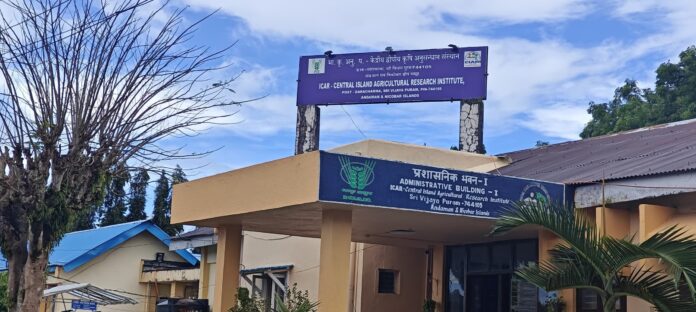
At Chouldary Village, an awareness programme organized on June 5 focused on the need to conserve soil health and reduce dependence on excessive chemical fertilizer use. Around 25 farmers participated in the event, which was led by scientists from the ICAR-Central Island Agricultural Research Institute (CIARI).
Addressing the gathering, Principal Scientist Dr. P.K. Singh warned that indiscriminate and prolonged use of chemical fertilizers has adversely affected agricultural productivity in many areas. He explained that excessive dependence on inorganic inputs can weaken soil structure, reduce microbial activity and impact long-term crop yields.
Dr. Singh advocated sustainable alternatives such as green manuring through Dhaincha cultivation, balanced application of NPK fertilizers and the gradual adoption of organic and natural farming systems suited to island conditions. He urged farmers to utilize locally available resources and adopt cropping systems that promote ecological balance while maintaining productivity.
The programme also featured technical sessions on innovative farming practices. Scientist Chittaranjan Raul highlighted the use of Azolla as a biofertilizer in paddy cultivation, explaining how it contributes to nitrogen fixation, improves soil fertility and reduces fertilizer costs. He also demonstrated methods for converting aquatic weeds into compost, promoting nutrient recycling and waste management.
Agricultural economist Dr. Sharath Yeligar engaged farmers in discussions on changing agricultural trends in the islands, particularly the increasing preference for arecanut cultivation over traditional rice farming. Farmers cited labour shortages, higher returns from arecanut and challenges associated with paddy cultivation as key factors influencing the shift.
A similar message was echoed in Guptapara Village on June 8, where an awareness programme was jointly organized by Krishi Vigyan Kendra (KVK) South Andaman, the Agriculture Department, ATMA and the Gram Panchayat.
Scientists emphasized the importance of good agricultural practices to safeguard farmland and improve sustainability. Participants were advised to gradually reduce chemical inputs and replace them with organic manures and biological pest management techniques.
Experts also discussed proper field selection, crop planning, soil management and environmentally friendly disease and pest control measures. Speakers highlighted the benefits of natural farming and warned against the long-term consequences of excessive chemical dependence on both soil health and environmental quality.
While soil conservation remained a central theme, the campaign in Car Nicobar linked agricultural sustainability with broader environmental concerns during a combined observance of World Ocean Day and Khet Bachao Abhiyan at Big Lapathy Village.
The programme, attended by nearly 60 farmers and farm women, brought together scientists, village leaders and representatives from the Agriculture, Fisheries, Animal Husbandry and Forest Departments.
Speakers highlighted the interconnected relationship between healthy ecosystems, sustainable agriculture and climate resilience. Addressing participants, agricultural experts stressed that environmental conservation cannot be separated from agricultural development, particularly in fragile island ecosystems.
Director of ICAR-CIARI Dr. Jai Sunder emphasized that oceans play a critical role in regulating the Earth’s climate by absorbing a significant proportion of atmospheric carbon dioxide. He pointed out that despite being surrounded by water, many island communities continue to face freshwater challenges, making water conservation and rainwater harvesting increasingly important.
He also underlined the importance of protecting forests, planting indigenous tree species and conserving biodiversity to strengthen climate resilience. Rising temperatures, sea-level rise and land degradation, he said, are creating new challenges for island communities and agricultural systems alike.
The event concluded with a beach-cleaning campaign and tree plantation drive involving farmers, government officials and local residents. Participants pledged to support environmental protection, sustainable farming and responsible resource management.
Agricultural scientists believe the growing outreach of Khet Bachao Abhiyan reflects an increasing recognition that the future of farming in the islands depends on balancing productivity with ecological sustainability. As climate pressures intensify and soil health concerns grow, experts say the transition towards organic inputs, resource conservation and climate-resilient farming practices will be critical for ensuring food security and protecting agricultural livelihoods across the Andaman and Nicobar Islands.