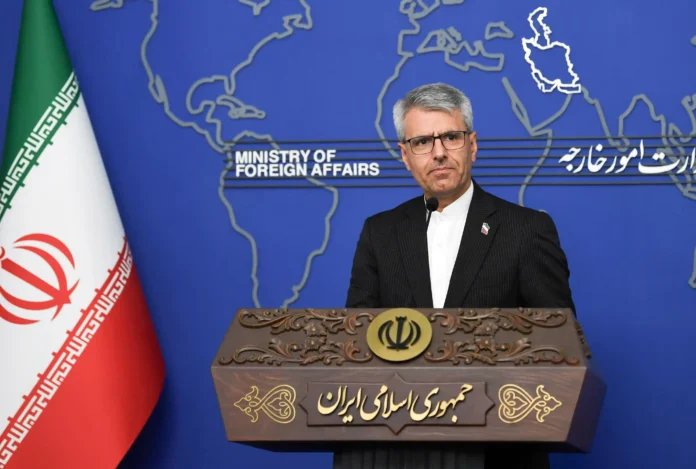
Tehran, Oct 27: Iran has said the outcome of Israel’s parliamentary election will not change Tehran’s position towards the country, while warning that it remains prepared to defend its territory amid escalating regional tensions. Tehran has also called for changes to the security arrangements governing the Strait of Hormuz, arguing that West Asia’s post-war realities require a different approach to regional security and maritime routes.
Iranian Foreign Ministry spokesperson Esmaeil Baghaei made the remarks at his weekly press conference in Tehran on Monday, ahead of Israel’s parliamentary election scheduled for October 27. He criticised Israel’s conduct in West Asia, accusing it of fuelling violence and carrying out what he described as genocide against Palestinians. He also characterised Israeli threats against Iran as part of a hostile approach towards Tehran.
Responding to claims by Israeli officials that Iran could launch pre-emptive strikes to disrupt the election, Baghaei accused Israel of being highly capable of conducting false-flag operations. He said Iranian authorities were closely monitoring developments and that the country’s armed forces would act to defend its territory if necessary.

Baghaei said Iran was in a state of war and maintained that it would exercise its right to self-defence. His comments underscored Tehran’s position that the Israeli election would not determine its approach to the wider regional confrontation.
Separately, Iranian Foreign Minister Seyed Abbas Araghchi said the administration of the Strait of Hormuz and the routes passing through the strategic waterway would not return to their previous arrangements. The official news agency IRNA reported his remarks at a ceremony in Tehran on Sunday.
Araghchi said the US-Israeli war against Iran had brought fundamental and strategic changes to West Asia, creating new conditions for the region. He added that negotiations on certain issues had taken place and would continue.

The foreign minister also argued that regional countries should take responsibility for ensuring security without depending on foreign forces. He said outside powers had entered the region to protect their own interests and Israel, and warned that their continued presence would bring insecurity rather than stability.
Araghchi said Iran was prepared to cooperate with other countries in the region.
The statements place Iran’s position on Israel’s election alongside its broader demands over regional security and the Strait of Hormuz, a key waterway whose future management Tehran says must reflect the changes brought about by the conflict. Both officials framed their remarks around Iran’s security concerns, its stated right to defend itself and the role of regional countries in determining West Asia’s future security arrangements.