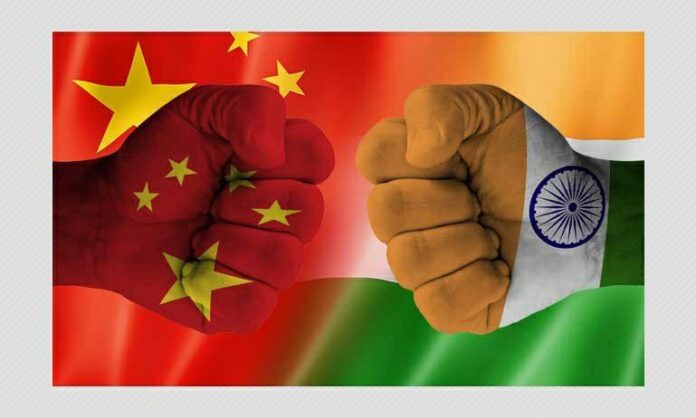
In just a matter of weeks, the US-India relationship appears to have frayed, and much of India’s media and political class suddenly finds itself tilting toward China. The shift in sentiment is striking, but also deeply misguided. For all the grievances New Delhi may harbor against Washington, pivoting toward Beijing will be a costly mistake.
China’s record speaks for itself. During the conflict with Pakistan, Beijing was not a passive observer, it openly backed Islamabad, providing the right aerial gear at the right moment. Washington, meanwhile, may only claim to have leaned in to end hostilities, but it was never arming India’s adversaries. To gloss over this distinction is to rewrite history.
Equally, China is nobody’s friend. From Sri Lanka to Zambia, nations that once welcomed Chinese “assistance” now find themselves drowning in debt and beholden to Beijing’s interests. India should take note. Warmth from China comes at a prohibitive cost, and almost always with strings attached.
The economic logic also falters. India currently runs a current account surplus with the United States, an advantage that could have expanded further if market access were negotiated more wisely. With China, however, India is already staring at a $100 billion deficit. Any further embrace of Chinese trade will only deepen that imbalance. It is Beijing, not New Delhi, that desperately needs another large market to absorb its goods as U.S. demand closes off. In this equation, it is China that gains most from “friendship.”
Nor is Beijing offering any quid pro quo. Is it returning the swathes of Indian land it has illegally occupied? Is it abandoning its claim to Arunachal Pradesh? Is it dialing down aggression at the border? The answers are self-evident. Yet the political establishment seems intent on engineering a new narrative that paints Beijing as a partner.
India’s 25-year engagement with the U.S. delivered tangible economic dividends, investment, technology, services, and global credibility. A breakdown in this relationship is neither strategic nor wise. Unlike China, the U.S. has helped create opportunities for Indian talent and industry, from Silicon Valley to Wall Street. Beijing will never bolster Indian services or manufacturing; if it brings capital at all, it will be at exorbitant terms, designed to entrap rather than empower.
Much of this anti-U.S. sentiment may be triggered by the personality and policies of Donald Trump. But leaders change; political cycles end. In three years, America may look very different, while India’s relationship with Washington could take a decade to mend if it is abandoned now. Betting on short-term irritation at the cost of long-term alignment would be a grave error.
It is also worth challenging the fashionable narrative that the U.S. is in terminal decline. This argument surfaced during the global financial crisis too, only for America’s private sector to roar back and reinvent itself yet again. To underestimate that resilience is to misread history.
Finally, expecting China to share advanced technology, whether in hardware, software, or platforms, is sheer wishful thinking. Beijing guards its strategic assets jealously. The U.S., by contrast, has already been a partner in co-development and knowledge transfer, however imperfectly.
India faces a choice. It can vent its frustrations with Washington and drift into Beijing’s embrace. Or it can recognize that China is not the answer, never has been, never will be. The former may offer fleeting comfort; the latter secures India’s long-term strategic and economic interests.