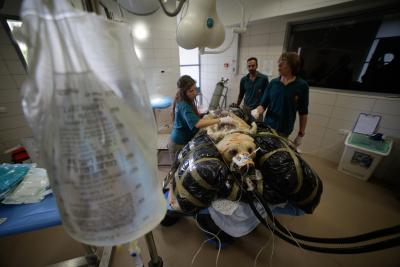
In a landmark development for veterinary healthcare, India has unveiled its first comprehensive national guidelines and standard operating procedures (SOPs) for animal blood transfusion and blood banks, marking a decisive step towards structured and safe veterinary transfusion medicine in the country.
The initiative, announced on Monday by the Department of Animal Husbandry and Dairying (DAHD) under the Ministry of Fisheries, Animal Husbandry and Dairying, aims to standardise procedures that until now were largely unregulated, often conducted in emergencies and without uniform safety measures.
Blood transfusion is recognised as a life-saving procedure for animals suffering from trauma, severe anaemia, surgical blood loss, infectious diseases, and coagulation disorders. Yet, in India, the absence of national frameworks had meant that donor screening, blood typing, and storage protocols were inconsistently applied across veterinary facilities.
The newly launched guidelines are designed to fill this critical gap by offering a scientific, ethical, and structured approach to all aspects of veterinary blood transfusion, from donor selection and blood collection to storage, transfusion procedures, and post-procedure monitoring.
Officials said the guidelines were developed after extensive consultations with veterinary universities, the Veterinary Council of India, ICAR institutes, practising veterinarians, state governments, and experts, ensuring alignment with global best practices.
Veterinary Blood Banks: State-regulated centres will be established with biosafety-compliant infrastructure to ensure safety and reliability.
Mandatory Blood Typing: Cross-matching and typing will be compulsory to avoid adverse reactions from incompatible transfusions.
Donor Eligibility: Criteria include health status, vaccination history, age, weight, and disease screening.
Voluntary Donations: A Donor Rights Charter has been created, emphasising non-remunerated, voluntary donations with informed consent.
Zoonotic Risk Management: One Health principles have been integrated to safeguard against diseases that can spread between animals and humans.
Standardised SOPs: Comprehensive forms, checklists, and protocols have been designed for donor registration, transfusion monitoring, and reporting adverse reactions.
The guidelines also propose the creation of a National Veterinary Blood Bank Network (N-VBBN), featuring digital registries, real-time blood inventories, and an emergency helpline to streamline coordination across states.

Looking ahead, the framework encourages innovations such as mobile blood collection units, cryopreservation of rare blood types, mobile apps for donor-recipient matching, and advanced transfusion research. Training modules for veterinary students, postgraduate programmes, and continuing education for practitioners will be developed to ensure skill-building in the field.
Officials underscored the significance of the guidelines in the context of India’s vast animal population. The country has over 537 million livestock and more than 125 million companion animals, making it one of the largest livestock and pet-owning nations globally. The sector contributes 5.5 per cent to India’s GDP and more than 30 per cent to agricultural GDP, highlighting its central role in food security, livelihoods, and public health.
With demand for specialised veterinary care on the rise, particularly in urban centres with growing numbers of companion animals, the guidelines are expected to save countless animal lives, strengthen rural livelihoods, and improve animal welfare nationwide.
Officials clarified that while the guidelines are advisory and non-statutory in nature, they are intended to remain dynamic, evolving in response to new scientific evidence, field experiences, and stakeholder feedback. The document is anchored in high standards of animal welfare, biosafety, and public trust.
Experts say the introduction of a national framework could be transformative. Standardised transfusion protocols will reduce risks during surgeries and emergencies, while structured blood banking systems will ensure that veterinarians have access to reliable resources.
By formalising this previously neglected area of veterinary medicine, India is poised to set benchmarks in animal healthcare. The initiative not only reflects a growing emphasis on animal welfare but also strengthens the broader One Health approach, which recognises the interconnected health of humans, animals, and ecosystems.