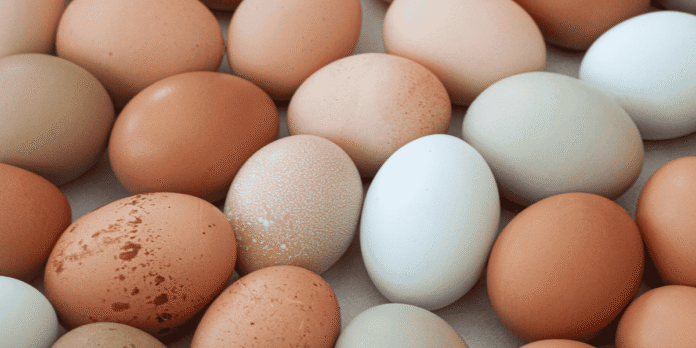
The Food Safety and Standards Authority of India (FSSAI) has clarified that eggs available in the country are safe for human consumption, amid recent claims about the presence of carcinogenic substances. The regulator termed the reports as “misleading” and stated they are “not supported scientifically and capable of creating unnecessary public alarm.”
The clarification comes following several media and social media reports alleging the presence of nitrofuran metabolites (AOZ), substances considered carcinogenic, in eggs. FSSAI emphasised that the use of nitrofurans is strictly prohibited at all stages of poultry and egg production under the Food Safety and Standards (Contaminants, Toxins and Residues) Regulations, 2011.

The authority noted that an Extraneous Maximum Residue Limit (EMRL) of 1.0 micrograms per kg has been prescribed for nitrofuran metabolites only for regulatory enforcement purposes. This limit indicates the minimum level detectable by laboratory methods and does not imply approval for use. FSSAI further clarified that trace residues below this EMRL do not constitute a food safety violation or pose any health risk.
Highlighting India’s alignment with global practices, FSSAI pointed out that the European Union and the United States also prohibit nitrofurans in food-producing animals. Regulatory benchmarks in different countries vary due to analytical and enforcement approaches, rather than differences in safety standards.
On health concerns, FSSAI cited scientific evidence confirming no established causal link between trace-level dietary exposure to nitrofuran metabolites and cancer or other adverse health outcomes in humans. The authority stressed that no national or international health body has linked normal egg consumption with increased cancer risk.

FSSAI officials also addressed reports of contamination in specific egg brands, noting that such findings are isolated and often batch-specific, arising from accidental contamination or feed-related factors. These isolated detections do not reflect the overall safety of the egg supply chain. The regulator urged consumers not to generalise isolated laboratory findings to question the safety of eggs in general.
Consumers were advised to rely on verified scientific data and official advisories. FSSAI reiterated that eggs remain a safe, nutritious, and essential part of a balanced diet when produced and consumed according to food safety regulations.