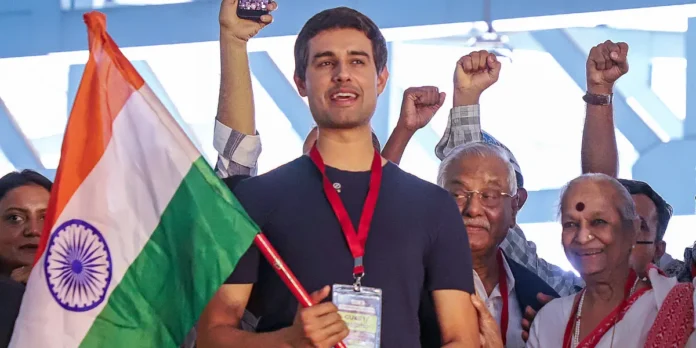
New Delhi, Nov 23: A Delhi court has issued a non-bailable warrant against YouTuber Dhruv Rathee after repeated attempts to secure his appearance in an eight-year-old criminal defamation case over his video titled “BJP IT Cell Part 2” failed. The case, filed by Vikas Sankrityayan alias Vikas Pandey, centres on allegations that the video damaged his reputation, with the proceedings facing prolonged delays over difficulties in serving court notices to Rathee, who resides in Austria.
The Saket Court issued the warrant on Monday after Rathee failed to appear during the proceedings and took note of the unsuccessful attempts to ensure his presence. The court scheduled the next hearing for December 3.
The latest order follows two unsuccessful attempts to execute bailable warrants against the YouTuber. On October 31, the court issued a fresh bailable warrant and directed authorities to serve it at his Gurugram address. However, the warrant could not be executed.

Before that, on October 17, the court had issued another bailable warrant after it was informed that fresh summons could not be delivered because the premises at Rathee’s residence were found locked. The warrant also remained unexecuted after the court learnt that it had been issued at an incorrect address in Austria.
The criminal defamation complaint dates back to a video titled “BJP IT Cell Part 2”, which Pandey alleged had harmed his reputation. Pandey, who founded the social media page ‘I Support Narendra Modi’, also objected to the subsequent sharing of the video by Aam Aadmi Party (AAP) National Convenor Arvind Kejriwal in 2018.
The proceedings against Rathee have faced difficulties in securing his appearance since 2019. The complainant has maintained that Rathee’s continued absence from India contributed to the delay in the case.
The controversy also led to separate proceedings involving Kejriwal, who had retweeted the video. In February 2024, he informed the Supreme Court that sharing the content had been a mistake.

A Bench comprising Justices Sanjiv Khanna, who later became Chief Justice of India and has since retired, and Dipankar Datta stayed the trial court proceedings against Kejriwal while considering his challenge to the Delhi High Court’s refusal to quash the summons issued to him.
The Delhi High Court had earlier upheld the summoning order, observing that sharing allegedly defamatory material through a retweet could attract prosecution under Section 499 of the Indian Penal Code (IPC).
The Supreme Court proceedings concerning Kejriwal’s challenge and the criminal defamation case against Rathee form separate aspects of the wider dispute. The latest non-bailable warrant concerns Rathee’s continued non-appearance before the trial court.