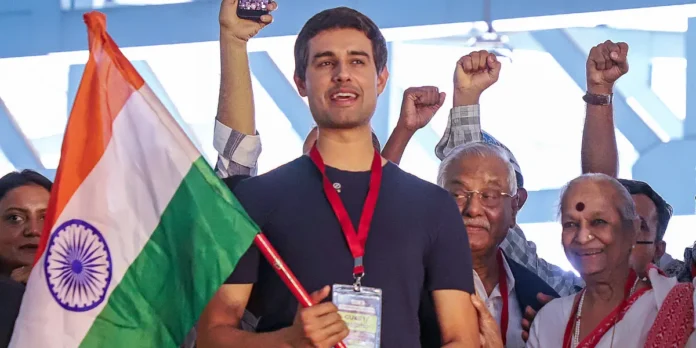
New Delhi, Oct 31: A Delhi court has issued a fresh bailable warrant against YouTuber Dhruv Rathee in a criminal defamation case pending since 2018, after two earlier attempts to serve court process failed, highlighting continuing difficulties in securing his appearance in the proceedings.
The Saket court passed the order on October 31 and directed that the fresh warrant be sent to Rathee’s Gurugram address. During the hearing, the court was informed that Rathee had already left India. The next hearing has been scheduled for November 23.
The court had issued a bailable warrant on October 17 after learning that earlier summons could not be served because the premises at his residence were found locked. However, the subsequent warrant also remained unserved after the court found that authorities had sent it to an incorrect address in Austria.

The case stems from a video titled ‘BJP IT Cell Part 2’, which allegedly defamed complainant Vikas Pandey. Pandey, founder of the social media page ‘I Support Narendra Modi’, alleged that the video damaged his reputation. Aam Aadmi Party national convenor Arvind Kejriwal had also retweeted the video in 2018.
Proceedings against Rathee have remained pending amid repeated difficulties in serving summons since 2019. The complainant has maintained that Rathee’s continued absence from India has delayed the case. Rathee ordinarily resides in Austria.

The defamation dispute had also reached the Supreme Court through Kejriwal’s challenge to the criminal proceedings arising from his retweet. In February 2024, Kejriwal acknowledged before the apex court that sharing the video had been a mistake.
A Bench comprising Justice Sanjiv Khanna, who later became Chief Justice of India and has since retired, and Justice Dipankar Datta stayed the trial court proceedings against Kejriwal while hearing his challenge to the Delhi High Court’s refusal to quash the summons.
The Delhi High Court had upheld the summoning order, observing that sharing allegedly defamatory material through a retweet could attract prosecution under Section 499 of the Indian Penal Code.