Sri Vijaya Puram, June 4: Senior Congress leaders TSG Bhasker and Tamil Selvam on Wednesday raised a series of concerns relating to healthcare services, air connectivity, water supply, sanitation, inflation, and the proposed framework for the Andaman and Nicobar Tribal Council, calling for greater public consultation and administrative intervention on several issues affecting island residents.
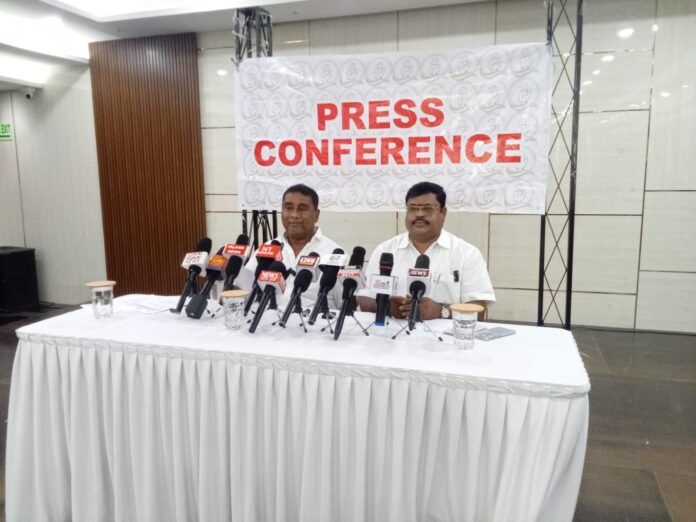
Addressing a press conference in Sri Vijaya Puram, the leaders said a number of public service challenges continue to impact residents across the Andaman and Nicobar Islands and urged the administration to take corrective measures.
A key issue highlighted during the interaction was the administration’s draft notification concerning the formation of the Andaman and Nicobar Tribal Council and the preparation of electoral rolls for the proposed body. Bhasker questioned the introduction of an electoral process for indigenous tribal communities, arguing that many of these communities have historically managed their affairs through customary systems and traditional social institutions.
According to him, tribal communities in the islands possess established mechanisms for decision-making, dispute resolution, resource management, and community welfare that have evolved over generations. He expressed concern that introducing electoral politics into such systems could alter traditional governance structures and social dynamics.

The Congress leader urged the administration to undertake wider consultations with tribal communities and stakeholders before moving forward with the proposal. He said any institutional framework affecting indigenous communities should be developed with their participation and consent.
Healthcare services at GB Pant Hospital also featured prominently during the press conference. While welcoming recent efforts to fill vacant medical positions, the leaders maintained that shortages of specialist doctors continue to affect patient care in several departments.
Tamil Selvam alleged that procurement delays and shortages of equipment and essential supplies remain persistent challenges within the healthcare system. He claimed that overcrowding in wards and inadequate facilities have added pressure on both patients and healthcare workers.
The leaders called for comprehensive reforms to strengthen healthcare infrastructure in the islands, particularly at the referral hospital, which caters to patients from multiple districts and remote islands.
Another issue raised was the increasing cost of air travel between the islands and mainland India. The Congress leaders stated that high airfare rates have become a significant burden for residents who must travel for education, medical treatment, employment opportunities, and family emergencies.
They proposed that a fixed number of seats on every flight operating to and from the islands be reserved at affordable rates for local residents. According to the leaders, affordable air connectivity is a necessity rather than a luxury for people living in a geographically isolated Union Territory.
The leaders also expressed concern over inflation and the rising prices of essential commodities. They said residents continue to face higher costs for everyday goods compared to many mainland cities due to transportation and logistical challenges.
Construction materials were cited as another area where prices have increased considerably, affecting both individual households and development activities. The Congress leaders argued that rising costs are placing additional financial strain on families already dealing with higher living expenses.

Water supply issues were also discussed during the press conference. The leaders alleged that substantial quantities of treated water are being lost through leakages in aging pipelines and distribution networks. They called for modernization of the water infrastructure to improve efficiency and reduce wastage.
Tamil Selvam further highlighted concerns regarding sanitation services, stating that vacancies created by retirements among sanitation workers have not been adequately filled. According to him, the shortage has affected garbage collection, drainage cleaning, and maintenance activities in several localities.
The leaders also questioned the effectiveness of the Government e-Marketplace (GeM) procurement system. They alleged that departments often face delays in receiving supplies and claimed that logistical constraints sometimes affect the quality and timely delivery of procured materials.
They suggested that greater preference be given to local businesses and suppliers wherever feasible, arguing that such an approach could support the local economy while improving service delivery.
Concluding the press conference, Bhasker and Tamil Selvam urged the administration to address healthcare gaps, improve water and sanitation infrastructure, explore measures to make air travel more affordable, and ensure that development policies are aligned with the needs and aspirations of the people of the Andaman and Nicobar Islands.