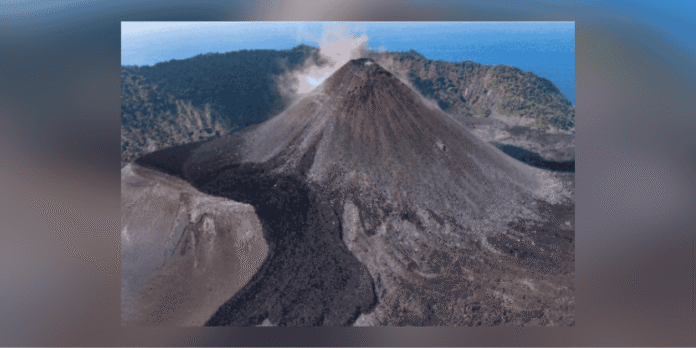
Sri Vijaya Puram, October 21: Two of the Andaman and Nicobar Islands’ most distinctive volcanic landscapes, Barren Island and Narcondam Island, are among the sites proposed for inclusion on UNESCO’s World Heritage List, placing the Union Territory’s geological and natural heritage in focus alongside the historic archaeological site of Sirpur in Chhattisgarh.
Located in the Andaman Sea, Barren Island lies around 138 km from Sri Vijaya Puram, while Narcondam Island is approximately 240 km from the capital. Both are protected areas with restricted access, requiring permission from wildlife authorities before visitors can enter.
The proposed recognition draws attention to the geological features and distinctive landscapes of the two islands, which form part of the Andaman region’s natural heritage. Their remote locations, rugged terrain and protected status make conservation particularly important.
According to UNESCO, Narcondam Island remained uninhabited by humans until 1968, when a small police check post with around 20 personnel was established. The island rises abruptly from deep waters to approximately 710 metres above sea level, creating a prominent volcanic landform in the Andaman Sea.

UNESCO records that the name Narcondam is derived from ‘Naraka-Kundam’, meaning ‘a pit of hell’. The island’s densely forested summit occupies its western portion, with steep slopes falling away on all sides. Rocky shores and coastal caverns further define its landscape.
Barren Island, meanwhile, is a prominent volcanic landmark of the Andaman and Nicobar Islands. Together, the two islands represent the region’s geological significance and the diversity of its natural environments. Their proposed inclusion on the World Heritage List could bring wider international attention to the islands’ distinctive landscapes and the importance of protecting them.
Both islands remain under protection, and entry is regulated through the wildlife authorities. Any increased attention resulting from their proposed recognition would need to be balanced with the conservation requirements of these ecologically sensitive locations.
Sirpur Also Among the Sites Proposed
The Andaman Subduction Volcanoes are among the sites being considered alongside Sirpur, a nationally protected archaeological site in Mahasamund district of Chhattisgarh. Situated on the banks of the Mahanadi River, around 78 km from Raipur, Sirpur represents a different dimension of India’s heritage, with archaeological remains reflecting centuries of religious, cultural and commercial activity.
UNESCO describes Sirpur as a settlement that developed from a spiritual centre into a cultural and economic meeting point through multi-religious patronage and commercial activity. The site contains interconnected archaeological and architectural remains that illustrate the diversity of ancient Indian society.
The structures within its present boundaries date from the 5th to the 12th century CE. The eastern section contains a Vishnu temple complex, a school and a Shiva temple. The southern section comprises three separate sites, including two priestly residences and another Shiva temple.
The western section includes the Rajmahal Complex and Gandheshwar Temple, while a Pancharatha Shiva temple stands on the northern side. The Bateshwar Group of monuments occupies the central part of the site.

The inclusion of Sirpur alongside the Andaman Subduction Volcanoes highlights the range of heritage being considered for international recognition, from distinctive natural formations to archaeological landscapes shaped by centuries of human activity.
For the Andaman and Nicobar Islands, the proposed recognition of Barren Island and Narcondam Island brings attention to a part of the territory that remains largely inaccessible to the public but holds considerable geological and ecological significance. Their protected status and remote setting underline the importance of conservation as India’s natural heritage receives wider attention.
UNESCO World Heritage status is intended to recognise sites of outstanding universal value. The precise status of the proposed sites, including whether they have been formally nominated or are included on UNESCO’s Tentative List, should be confirmed against the organisation’s latest records before publication.