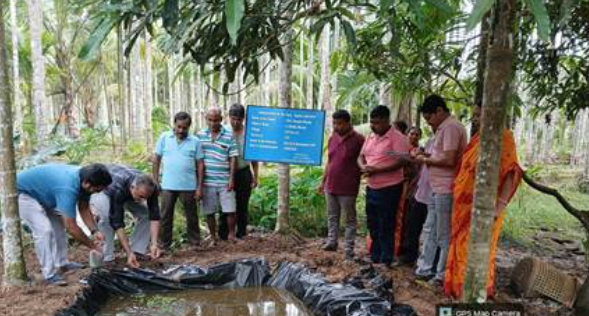
Sri Vijaya Puram, Aug. 26: The Department of Animal Husbandry & Veterinary Services, under UT-ATMA, conducted field demonstration programmes on Azolla cultivation at farmers’ fields in Ramkrishnapur village on August 18, introducing livestock farmers to a locally available and low-cost feed resource that can supplement cattle nutrition.
The demonstrations were organised at the fields of Bishwajit Sana and Swapan Mondal, both residents of Ramkrishnapur village. A total of 21 participants attended the two programmes, where farmers were provided practical guidance on cultivating Azolla and maintaining the small pits required for its production.
During the demonstrations, farmers were explained the method of cultivating Azolla, along with its nutritional benefits as livestock feed. The sessions also focused on simple techniques for establishing and maintaining Azolla pits, allowing farmers to understand how the resource could be produced at their own farms.
As part of the programme, the department provided inputs comprising concentrated cattle feed worth Rs. 4,800 for each demonstration. Azolla saplings were also supplied to the beneficiaries for establishing pits that had been prepared by the farmers themselves.
The field-based approach allowed participants to observe the cultivation process directly and understand how Azolla could be incorporated into livestock management. The programme also sought to create greater awareness among farmers about alternative feed resources that can be produced locally.
Bishwajit Sana has already established an Azolla pit and has been regularly using Azolla as feed for his cattle. During the programme, he reported an improvement in the overall health, condition and well-being of his animals after incorporating Azolla into their diet.
The experience generated interest among other participating farmers regarding the potential of Azolla as a livestock feed. The department highlighted its nutritional value and described it as a low-cost and locally available resource that could support livestock rearing.
For farmers, the availability of locally produced feed resources can be significant because the cost of animal feed forms an important part of livestock-rearing expenses. The promotion of alternative feed resources such as Azolla could therefore provide farmers with another option for supplementing conventional cattle feed.
The demonstrations were also aimed at encouraging farmers to adopt simple and sustainable practices that can be integrated into existing livestock-rearing systems. Since the cultivation of Azolla can be undertaken through dedicated pits at the farm level, farmers were given practical exposure to the basic requirements for establishing and maintaining the resource.
The participation of 21 farmers and the interest generated during the demonstrations indicate the potential for greater awareness of alternative livestock feed resources in the Islands. The department said that promoting such resources can contribute towards reducing the cost of animal rearing while supporting livestock productivity.
The initiative also reflects the role of field demonstrations in transferring agricultural and animal husbandry practices directly to farmers. Instead of relying only on classroom-based awareness programmes, the participants were able to observe the cultivation process and receive inputs for establishing their own Azolla pits.
The department has emphasised that sustainable feed resources can play a role in improving the economics of livestock farming. Locally available resources that provide nutritional value may help farmers reduce dependence on comparatively expensive feed inputs.
The demonstrations at Ramkrishnapur therefore combined practical training, material support and farmer-level experience to encourage the adoption of Azolla cultivation.
With livestock farmers receiving Azolla saplings and guidance for establishing pits, the programme has created an opportunity for participating beneficiaries to continue cultivating the feed resource beyond the demonstration itself.
The Department of Animal Husbandry & Veterinary Services said promotion of such sustainable feed resources can significantly reduce the cost of animal rearing and improve livestock productivity, potentially benefiting farmers who are looking for economical feeding options.