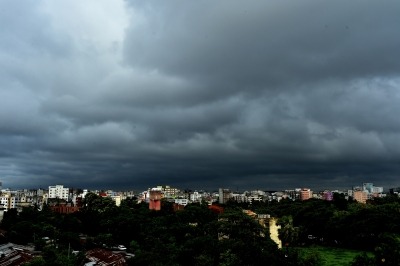
Sri Vijaya Puram, May 18: The India Meteorological Department (IMD) has issued a fresh weather warning for the Andaman and Nicobar Islands, forecasting heavy rainfall, thunderstorms, lightning and squally winds across the Union Territory over the next several days, prompting authorities to hoist cautionary signals at ports and advise fishermen against venturing into the sea.
According to official weather bulletins issued on May 16 and 17, heavy to very heavy rainfall ranging between 7 cm and 20 cm is likely at isolated places across the islands, accompanied by thunderstorms and gusty winds reaching speeds of 50 to 60 kmph. The weather system is expected to remain active till at least May 23.
Authorities said heavy to very heavy rainfall was likely on May 17, while heavy rainfall between 7 cm and 11 cm is expected at isolated locations on May 18. Thunderstorms with lightning and gusty winds between 40 and 50 kmph are also likely between May 19 and 23.
The worsening sea conditions have led authorities to issue advisories for fishermen operating along and off the Andaman and Nicobar coast. Officials warned that squally weather with wind speeds touching 40-50 kmph and gusting up to 60 kmph may prevail over coastal waters till May 21.

“Fishermen are advised not to venture along and off the Andaman and Nicobar coast during this period,” the advisory stated.
As a precautionary measure, Local Cautionary Signal-III (LC-3) has been hoisted at Sri Vijaya Puram Port, indicating the likelihood of adverse weather conditions affecting marine operations.
The alerts come amid the southwest monsoon’s gradual advancement over the Bay of Bengal region, often associated with turbulent weather conditions over the Andaman Sea and adjoining island territories during this time of the year.
Officials said isolated heavy rainfall could trigger localized waterlogging, slippery roads, reduced visibility and disruptions in ferry and inter-island transport services. Residents living in low-lying and vulnerable coastal areas have been advised to remain alert and avoid unnecessary movement during periods of intense rainfall or thunderstorms.
Disaster management authorities are also monitoring the evolving weather conditions closely. Emergency response teams and line departments have reportedly been asked to stay prepared for any contingency arising from strong winds, lightning strikes or heavy rainfall-related incidents.
The warning assumes significance for the islands, where maritime transport and fishing activities remain central to everyday life and livelihoods. Rough sea conditions frequently disrupt movement of vessels, particularly smaller fishing boats and inter-island ferries operating in exposed coastal stretches.
The IMD has further cautioned that lightning activity may pose risks in open areas, urging residents to avoid sheltering under trees and refrain from venturing into the sea during thunderstorm activity.
The current spell of adverse weather also coincides with heightened disaster preparedness efforts being undertaken across the islands. On May 16, the Directorate of Disaster Management, in coordination with the Indian National Centre for Ocean Information Services (INCOIS), conducted a virtual workshop on the Tsunami Ready Programme aimed at strengthening disaster resilience in coastal villages vulnerable to earthquakes and tsunamis.

The workshop discussed preparedness mechanisms, early warning systems, evacuation planning and community coordination measures for identified tsunami-prone villages across the islands.
Officials said the Andaman and Nicobar Islands remain highly vulnerable to multiple natural hazards due to their geographical location in a seismically active zone and exposure to cyclonic and oceanic weather systems.
Authorities have appealed to the public to follow official advisories and avoid spreading rumours related to weather conditions on social media platforms. Residents have also been urged to stay updated through official weather bulletins and instructions issued by district administrations.
The Meteorological Department is expected to continue monitoring the system and issue updated forecasts depending on developments over the Bay of Bengal and adjoining Andaman Sea region.