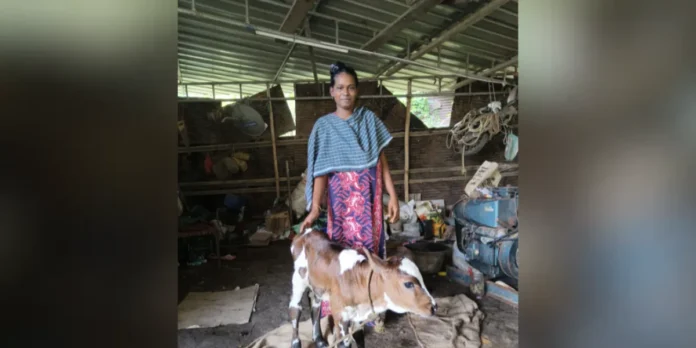
Sri Vijaya Puram, November 3: The Andaman and Nicobar Islands have recorded their first successful birth through Embryo Transfer Technology (ETT), marking a new development in scientific cattle breeding and efforts to improve the genetic quality of the Union Territory’s livestock. The female calf, born on November 1 under the jurisdiction of Veterinary Hospital, Garacharma, represents the completion of the first cycle of the technology introduced by the Department of Animal Husbandry and Veterinary Services (AH&VS).
The calf was born to a cow owned by K. Priya, a resident of Kamraj Nagar. The department confirmed that both the mother and newborn are healthy and that the delivery took place normally. Based on measurements of the calf’s girth and length, its estimated birth weight stands at 21.3 kg.
The successful calving follows an embryo transfer carried out on February 10, 2026. Veterinary officials confirmed the pregnancy on March 20, completing the reproductive cycle that has now resulted in the birth of the Islands’ first female calf through the technology.

The department launched the ETT project earlier this year in collaboration with NDDB Dairy Services, with the objective of accelerating genetic improvement in local cattle. The programme seeks to increase the proportion of female calves, improve the milk production potential of livestock and support the broader development of the dairy sector across the Islands.
The initial embryo transfers took place in February 2026, beginning with selected clusters in South Andaman. The latest outcome provides the first successful birth under the initiative and establishes a basis for expanding the use of advanced reproductive techniques under island conditions.
ETT enables the transfer of embryos into recipient cows as part of a scientific breeding programme. The department has also identified Sex Sorted Semen as another breeding practice that livestock farmers can adopt to support improved productivity and better returns.

The Department of AH&VS has congratulated the beneficiary farmer and the veterinary personnel involved in the procedure, pregnancy monitoring and successful calving. It has also highlighted the potential of the outcome to encourage greater participation by livestock farmers in scientific breeding methods.
With the first ETT female calf now born, the department’s initiative moves beyond the embryo-transfer and pregnancy stages to a successful live birth, providing an initial outcome for the Islands’ efforts to strengthen cattle genetics and enhance dairy production potential.