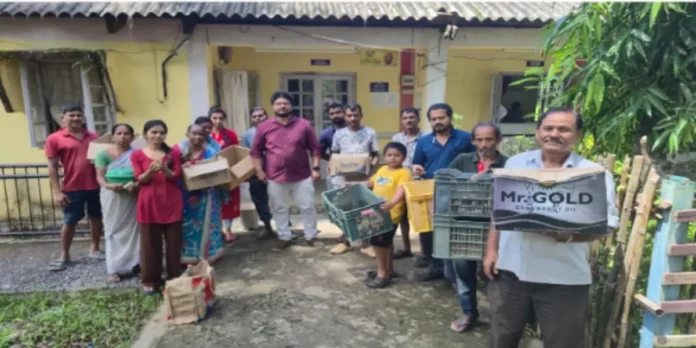
Sri Vijaya Puram, June 23: Efforts to strengthen rural livelihoods and improve household nutritional security received a boost in South Andaman as the Department of Animal Husbandry and Veterinary Services distributed more than 1,000 poultry chicks to backyard farmers under its ongoing poultry development programme.
The distribution programme was conducted at the Veterinary Dispensary in Manglutan, where 20 backyard poultry farmers received a total of 980 day-old Vanaraja chicks and 112 day-old Guinea Fowl chicks. The initiative aims to encourage backyard poultry farming as a sustainable source of income while supporting food and nutritional needs in rural communities.
Officials said the programme forms part of the department’s broader efforts to expand poultry-based livelihood opportunities across the islands. By providing quality poultry stock and technical support, the department seeks to improve the productivity and sustainability of small-scale poultry units operated by local households.

Along with the distribution of chicks, beneficiaries received technical guidance on scientific poultry management practices. Veterinary personnel provided information on brooding management, feeding requirements, vaccination schedules, disease prevention measures and general flock management techniques to help farmers maintain healthy poultry units.
The advisory support focused on improving chick survival rates, ensuring proper growth and enhancing the long-term viability of backyard poultry farming activities. Officials emphasized that scientific rearing practices play a crucial role in increasing productivity and reducing losses among small poultry farmers.
Backyard poultry farming has emerged as an important component of rural livelihood development in the Andaman and Nicobar Islands. The Department of Animal Husbandry and Veterinary Services continues to promote the activity as a means of generating supplementary income, strengthening household food security and creating economic opportunities, particularly in rural and semi-urban areas.
The programme also aligns with efforts to encourage self-employment and support community-based agricultural activities that can be managed at the household level. Officials noted that backyard poultry farming contributes to both income generation and access to protein-rich food sources for families.

The Vanaraja and Guinea Fowl breeds distributed under the programme were selected for their suitability to local conditions. According to the department, both breeds adapt well to the climatic conditions of the islands and possess characteristics that make them suitable for backyard farming systems.
The breeds are known for their disease resistance and dual-purpose utility, offering farmers opportunities for both egg and meat production. These attributes are expected to support better returns for beneficiaries while promoting sustainable poultry rearing practices.
Through initiatives such as chick distribution and farmer training, the department aims to strengthen the rural poultry sector and expand livelihood opportunities for island communities. Officials stated that continued technical support and scientific management practices will remain key components in ensuring the success of backyard poultry farming across the region.