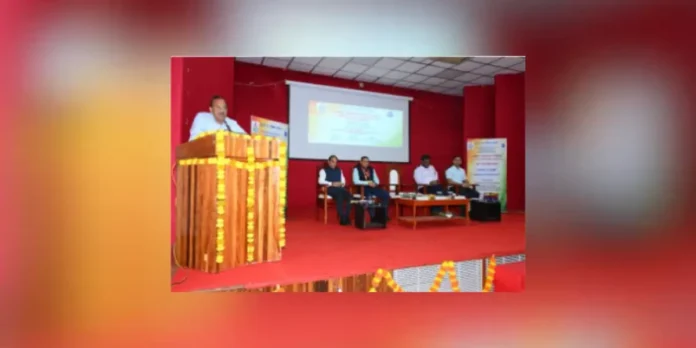
Sri Vijaya Puram, Oct. 29: The Andaman and Nicobar Administration should reduce direct public interface in government services, move schemes and services online and use service-delivery timelines to strengthen preventive vigilance, Chief Secretary Gyanesh Bharti said at a workshop on corruption prevention and administrative accountability on October 28.
Bharti, who also serves as Chief Vigilance Officer of the administration, inaugurated the one-day workshop on ‘Preventive Vigilance and Capacity Building’, organised by the Vigilance Department at Tagore Government College of Education in Sri Vijaya Puram. About 200 officers and officials attended the programme as part of Vigilance Awareness Week 2026, observed from October 26 to November 1 under the theme ‘Probity for Prosperity’.
The Chief Secretary called for a shift from punitive action after corruption occurs to systems that reduce opportunities for misconduct. He said departments should make government services and schemes available online and objectively monitor performance by analysing the time taken to deliver services and the outcomes achieved.

He also stressed that officials must discharge their duties on time and maintain integrity, transparency and accountability. He urged departments to review and refresh their understanding of government procedures, rules, instructions and Central Vigilance Commission (CVC) guidelines to support sustainable good governance.
Bharti directed inquiry officers and presenting officers to clear pending departmental inquiries within stipulated timelines. He called for a mission-mode approach to reducing pendency and enabling quicker decisions.
Commissioner-cum-Secretary (Vigilance) Sachin Shinde called for result-oriented methods to identify and address systemic gaps. He said officials needed to strengthen their understanding of complex vigilance procedures so that inquiries relied on facts and concluded without unnecessary delays or harassment.
Central Vigilance Commission Director Dhananjay Kumar Ranjan explained how officials should assess complaints involving vigilance issues, determine when CVC advice was required and follow prescribed procedures. He also addressed whistleblower protection and the Public Interest Disclosure and Protection of Informers framework.
The Anti-Corruption Unit outlined procedures for corruption cases, including permissions for investigation and prosecution sanctions under Sections 17 and 19 of the Prevention of Corruption Act, 1988. The workshop also covered information technology interventions, charge-sheet drafting, departmental inquiry procedures, the responsibilities of inquiry and presenting officers, and vigilance clearance.

Resource persons, including retired government employees, led sessions intended to strengthen the capacity of inquiry authorities and administrative officials across departments.
The programme concluded with a quiz on the subjects covered. Participants reiterated their commitment to integrity, transparency, efficiency and accountability in official duties.
Vigilance Awareness Week is observed annually during the week that includes the birth anniversary of Sardar Vallabhbhai Patel, with a focus on promoting integrity and transparency through awareness and preventive measures.