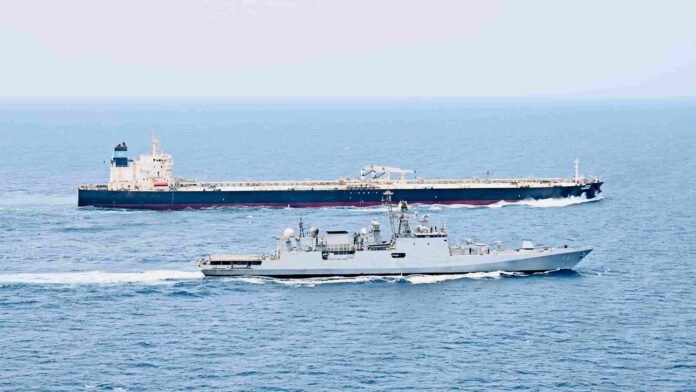
New Delhi, Sept. 22: India’s increased purchases of Russian crude are being driven primarily by disruptions to oil supplies from West Asia rather than cheaper Russian barrels, according to an Axis Bank Economic Research report, which found that Russian imports have averaged 60 million barrels a month since the start of the US-Iran war.
The report said India imported 298 million barrels of Russian crude during this period, compared with an average of 46 million barrels a month between FY23 and FY26. It said the increase represented an additional 1 million barrels per day since March 2026, a rise that could not be explained by price movements alone.
Russia’s share of India’s imported crude had risen from zero to 30 per cent between March 2022 and June 2023, a shift the report attributed likely to discounts available on Russian oil. However, it said the price advantage had since remained relatively stable, while Russian crude continued to gain share even when it traded at a premium.

According to the report, the discount on Russian crude compared with West Asian crude has remained around $3-$5 per barrel since 2023. At the same time, Russia’s share of Indian crude imports increased even when Russian barrels carried premiums of as much as $7 per barrel.
The report said India would probably have faced higher oil prices if it had sourced the additional 60-80 million barrels through the spot market.
It also assessed the implications of US trade policy, saying recent experience suggested that the threat of high tariffs could provide greater leverage in trade negotiations than the tariffs themselves. The report noted that higher oil prices could pass more directly into US retail inflation and said Republicans were already facing pressure in the midterm elections because of elevated energy prices.

On tariffs affecting India, the report said congressional backing had made the threat legally durable, while pending Section 301 findings on excess capacity could increase tariff volatility. It cited the 18 per cent headline tariff rate agreed before the US Supreme Court invalidated tariffs imposed under the IEEPA authority in February 2026 as a reference point for India.
The report also noted that effective tariff rates can fall below headline rates because of exemptions.
Meanwhile, India’s exports have grown 19 per cent year-on-year so far this fiscal, led by electronics, automobiles and components, metals and refined petroleum products. Exports to the US have also recovered, the report said.