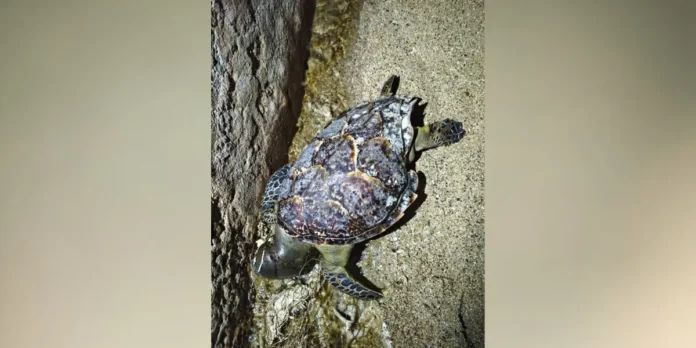
Sri Vijaya Puram, Sept. 22: A critically endangered Hawksbill turtle was found dead after becoming entangled in a fishing line near the Breakwater Jetty in Campbell Bay, Great Nicobar, highlighting the threat posed by unattended fishing gear to marine wildlife.
The turtle was discovered at around 11:10 pm on September 15, 2026. A local source who spoke to The Wave Andaman said the animal was found caught in a fishing line and was suspected to have died after becoming trapped and unable to free itself.
The Breakwater area is reportedly used for fishing because it provides access to the waters of Campbell Bay. Fishing activity and discarded or unattended lines in the area can expose marine animals to entanglement, potentially resulting in injury, drowning or death.

The incident has drawn attention to the risks faced by marine species from fishing gear and the need for safer fishing practices around the Breakwater, according to local residents and environmental concerns.
The Hawksbill turtle, scientifically known as Eretmochelys imbricata, is a critically endangered marine turtle recognised by its narrow, pointed beak and distinctive patterned shell. It occurs in tropical waters, including the Andaman and Nicobar Islands, and is associated particularly with shallow marine habitats such as coral and rocky reefs, lagoons and estuaries.
In the islands, Hawksbill turtles are recorded around reef systems and also nest on some beaches, although such nesting is less common than that of green and olive ridley turtles.

The species also has an ecological role in coral reef environments, feeding mainly on sea sponges and contributing to the maintenance of reef ecosystems.
The death at Campbell Bay has brought renewed local focus to the interaction between fishing activity and marine conservation in the Great Nicobar region. Preventing fishing lines and other gear from remaining unattended in waters used by marine wildlife remains a key concern raised following the incident.