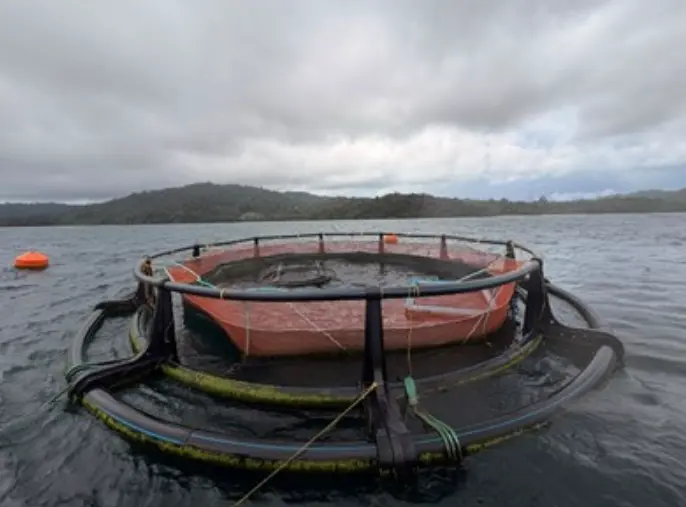
Sri Vijaya Puram, Sept. 7: An open-sea cage culture project at Chidiyatapu is being developed as a commercial mariculture model in the Andaman and Nicobar Islands, with two private firms currently rearing Asian Seabass in eight HDPE cages under leased sea areas allotted by the Department of Fisheries.
The Secretary (Fisheries), A&N Administration, along with officials of the Department of Fisheries, visited Chidiyatapu in South Andaman to assess the progress of the projects and review the implementation of mariculture activities by the participating firms.
M/s Aqua World Exports and M/s Canares Aquaculture LLP are undertaking the cage culture activities in sea areas leased by the Fisheries Department. The projects aim to diversify fisheries activities, promote mariculture and support the sustainable use of marine resources.

The facility uses an open-sea cage culture system comprising eight circular HDPE cages, each measuring 10 metres in diameter. The culture operation focuses on Asian Seabass, also known as Barramundi, a commercially important marine finfish species.
The project began with the stocking of around 20,000 Asian Seabass fingerlings on May 30, 2026. The fingerlings measured about 1.5 inches and weighed approximately 0.4 gram each at the time of stocking. The fish have since grown to an average body weight of around 150 grams.
The Secretary reviewed stocking, fish growth, feeding, stock maintenance and cage management practices during the field visit. The fish currently receive high-protein and high-fat feed, with consumption estimated at about 20 kg a day.
The first batch is expected to reach harvest size by April 2027, depending on growth and culture conditions. The project is intended to demonstrate the feasibility of open-sea cage culture in the islands and encourage wider participation in sustainable marine aquaculture.

The Fisheries Department has stressed scientific management of the cages, including appropriate stocking density, routine monitoring of fish health and growth, proper feeding, cage maintenance and compliance with environmental and biosecurity requirements.
The department is also working to allot additional sites for mariculture, including open cage and seaweed culture, with emphasis on sustainable production and environmental responsibility. The broader initiative seeks to increase fish production, create livelihood opportunities for fisheries stakeholders and reduce pressure on wild marine fishery resources.
The field visit also followed the Chief Secretary’s latest direction to Secretaries and Directors to undertake frequent field visits to review projects and activities on the ground.