New Delhi, Sept. 4: The Andaman and Nicobar Islands have been identified as one of India’s 10 geothermal provinces as the country begins moving geothermal energy into its renewable power strategy, with the first two geothermal wells commissioned in Ladakh marking a key step towards wider development of the resource.
The government factsheet said geothermal energy could help diversify India’s renewable energy mix as the country works towards its Net Zero target for 2070. Unlike solar and wind power, geothermal energy can provide low-carbon renewable energy continuously by drawing on heat stored beneath the Earth’s surface.
The Andaman and Nicobar Islands figure among the 10 geothermal provinces mapped across the country. The other provinces are the Himalayan Geothermal Province, Naga-Lusai, Son Narmada Tapi (SONATA), West Coast, Cambay Graben, Aravalli, Mahanadi, Godavari and South Indian Cratonic regions.

The Geological Survey of India has mapped 381 hot springs nationwide and identified a theoretical geothermal resource potential of nearly 10.6 GW. Of these resources, 42 sites have been recognised as promising for power generation and direct heat applications.
The government notified the National Policy on Geothermal Energy in September 2025 to establish a framework for exploration and development. The Ministry of New and Renewable Energy is responsible for implementing the policy.
A major step followed in July 2026 when the ONGC Energy Centre commissioned India’s first two geothermal wells at Puga Valley in Ladakh. Located more than 14,000 feet above sea level, the valley is recognised as one of India’s promising geothermal locations because of its hot springs and underground heat reserves.
The two wells, each 1,000 metres deep, will be used to evaluate the geothermal reservoir and support the proposed first 1-megawatt demonstration geothermal power project, marking India’s entry into geothermal power generation.

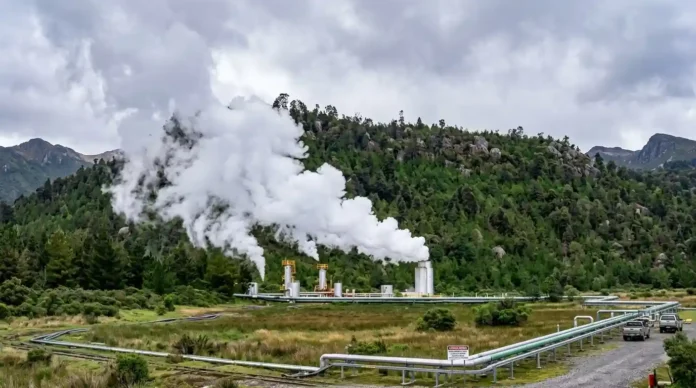
The technology uses deep wells to bring underground hot water and steam to the surface. Steam drives a turbine connected to a generator, while the water used in the process is condensed and reinjected into the reservoir to support continued energy production.
Beyond electricity, geothermal heat can serve applications including district heating, agriculture, aquaculture and space heating and cooling. Growing pilot projects and international collaborations are also expanding its potential uses to heating, geo-tourism and agriculture.
For the Andaman and Nicobar Islands, the inclusion in the national geothermal map places the archipelago within a broader resource-development framework as India explores additional sources of renewable energy. The government factsheet describes geothermal energy as an emerging addition to the country’s renewable energy portfolio.