Sri Vijaya Puram, Aug. 31: India’s renewed interest in Indonesia’s Sabang port could give the Andaman and Nicobar Islands a stronger commercial link with Southeast Asia, with the proposed project envisaging a maritime corridor connecting the islands with northern Sumatra. The initiative, however, is being framed primarily around trade, tourism, ship services and regional cooperation rather than a permanent Indian military presence.
India’s engagement with Sabang dates back to the 2018 “Shared Vision of India-Indonesia on Maritime Cooperation in the Indo-Pacific”, which identified stronger connectivity between the Andaman and Nicobar Islands and Sumatra as a key area of cooperation. The initiative subsequently resulted in joint task forces, feasibility discussions and proposals for a Sabang-Port Blair connection, although most of those plans have not yet developed into commercial operations.
The Australian Strategic Policy Institute (ASPI), in a report examining the project, said Sabang’s strategic importance would depend first on its ability to develop as a commercially viable and locally beneficial project led by Indonesia. The report cautioned against viewing the port primarily through the lens of China’s expanding maritime presence in the Indian Ocean.

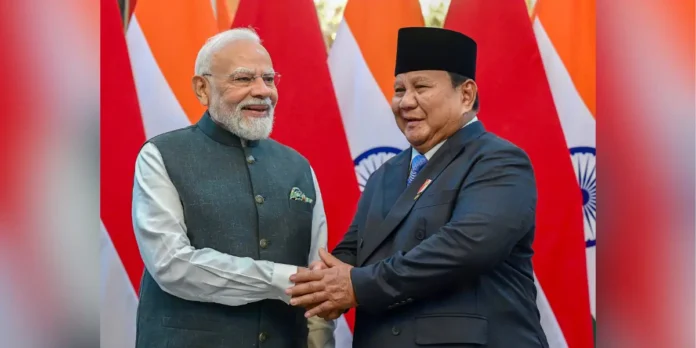
The project gained renewed political backing during Prime Minister Narendra Modi’s July visit to Jakarta, where Indonesian President Prabowo Subianto welcomed India’s interest in the integrated development of Sabang port. Located at the northern tip of Sumatra across the Andaman Sea from the Andaman and Nicobar Islands, Sabang could provide the geographical foundation for more regular commercial and maritime interaction between the two countries.
A joint statement issued during the visit gave greater detail to the proposed cooperation, identifying cruise and marine tourism, ship repair, shipbuilding and shore-based services supporting offshore energy activities. It also called on officials to determine the project’s scope, financing arrangements and development phases.
For the Andaman and Nicobar Islands, the ASPI report identified the proposal as an opportunity to expand their economic role beyond their security significance. It linked Sabang with the islands’ potential in transhipment, tourism and regional engagement, alongside development associated with the Great Nicobar Project.
A functioning Sabang-Port Blair corridor could support passenger and cargo services, ship-repair contracts, offshore-energy activity and skills exchanges, while facilitating greater movement of people and goods across the Andaman Sea. The proposal therefore places the islands at the centre of a potential commercial connection between India and Indonesia.

For Indonesia, the report said Sabang could bring investment, technology and employment to Aceh while supporting maritime industries and strengthening Indonesia’s position as a gateway between the Indian and Pacific Oceans. It also stressed that the project would need to remain visibly Indonesian-led, comply with national regulations and align with local economic priorities.
The report rejected descriptions of Sabang as an Indian response to China’s “String of Pearls” or as a prospective Indian military base. It noted that the agreement contains no provision for permanent operational access or a standing security presence, while Indonesia’s longstanding emphasis on sovereignty makes such an arrangement unlikely.
Instead, ASPI described India’s objective as improving maritime awareness, developing logistical familiarity and expanding cooperation with regional partners in the eastern Indian Ocean. In that framework, Sabang represents a partnership-based approach that could deepen India-Indonesia maritime ties while creating new commercial possibilities for the Andaman and Nicobar Islands.