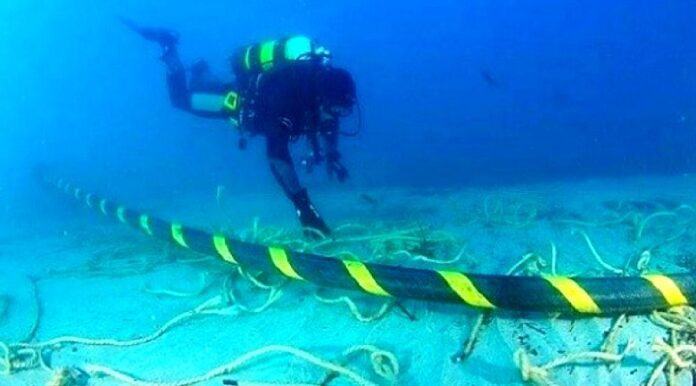
The United States Trade and Development Agency (USTDA) has announced support for a proposed submarine cable system linking India with Singapore and other major data hubs in Southeast Asia. The agency signed an agreement with SubConnex Malaysia Sdn. Bhd. to fund a feasibility study for the SCNX3 submarine cable system, aimed at improving connectivity for an estimated 1.85 billion people in the region.
The project, set to connect Chennai in southern India with Singapore, is intended to expand bandwidth and network resilience to meet rising demand for Artificial Intelligence (AI) and cloud-based services. Additional landing points under consideration include locations in Malaysia, Thailand, and Indonesia.
The feasibility study, assigned to Florida-based APTelecom LLC, will evaluate route design, engineering, financial modeling, commercialization planning, and regulatory frameworks. USTDA said the initiative will help attract private investment and reduce early-stage risks while ensuring international networks remain secure, reliable, and resilient against cyber threats and foreign interference.

“Deploying secure, U.S.-made subsea cable technology is essential to protecting sensitive data and critical infrastructure from cyberattacks and foreign espionage,” said Thomas R. Hardy, USTDA Deputy Director. He added that the project advances strategic priorities in South and Southeast Asia and reinforces the United States’ leadership in the global digital economy.
According to USTDA, the SCNX3 cable is expected to create opportunities for U.S. hardware, software, and services providers, enabling trusted solutions to strengthen digital infrastructure across the region. The agency highlighted the need for route diversity, as current networks in India and Southeast Asia remain vulnerable to outages and security risks.
The SCNX3 system is projected to improve digital access, enhance Cloud and AI service capabilities, and support secure communications for governments, businesses, and citizens. By adding new, resilient pathways, the cable aims to reduce dependency on existing lines and mitigate risks from potential disruptions.
Simon Zettl, CEO of SubConnex, described the project as “a critical step forward for strengthening the digital backbone of South and Southeast Asia.” He said the initiative will foster economic growth, digital inclusion, and rapid expansion of AI and cloud capabilities in one of the world’s fastest-growing digital markets.

USTDA emphasised that the study would promote secure cable technology and protect data flows from malicious foreign influence. Submarine cables carry the majority of global internet and data traffic, making secure, resilient infrastructure critical for national and regional digital economies.
The agreement was signed at the Pacific Telecommunications Council 26 conference in Honolulu, Hawaii, signalling heightened international collaboration in telecommunications infrastructure and highlighting the strategic importance of trusted undersea networks.
With SCNX3, stakeholders anticipate not only enhanced connectivity but also strengthened regional digital resilience, marking a significant step in addressing growing data demands and cybersecurity challenges in India and Southeast Asia.