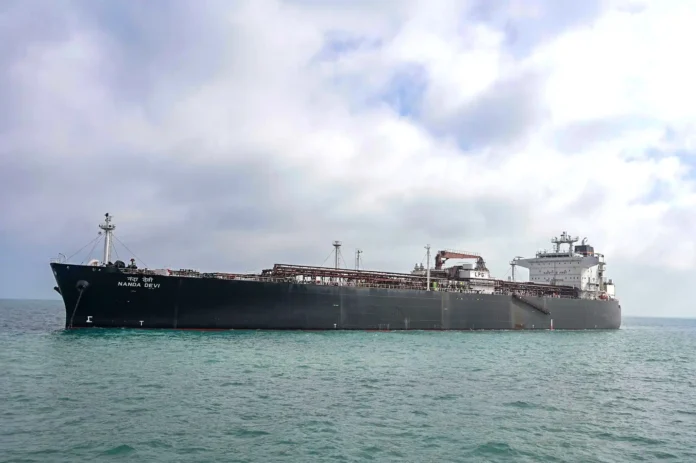
Washington, May 7: The United States escalated pressure on Iran after American forces struck and disabled an Iranian-flagged oil tanker in international waters near the Gulf of Oman, intensifying maritime tensions in the region amid an ongoing blockade targeting Iranian ports.
The US Central Command stated that the vessel, identified as Hasna, was intercepted on Wednesday while sailing toward an Iranian port. According to the statement, the tanker allegedly failed to respond to repeated warnings issued by US forces during its transit through international waters.
American military officials said the tanker’s rudder was disabled after a US Navy F/A-18 Super Hornet launched from the USS Abraham Lincoln fired multiple rounds from a 20mm cannon. The action halted the vessel’s movement toward Iran, the command said, adding that the tanker was no longer proceeding to its intended destination.

The operation comes days after Washington reaffirmed its maritime blockade measures against Iran. US Central Command stated that restrictions on vessels attempting to enter or leave Iranian ports remain fully operational despite recent adjustments to naval escort missions in the Strait of Hormuz.
Earlier, US President Donald Trump announced that the Pentagon had suspended missions involving guidance of commercial vessels through the Strait of Hormuz. However, he clarified that enforcement actions against Iranian-linked maritime activity would continue.
The latest confrontation unfolded amid heightened rhetoric from Washington regarding Iran’s military capabilities and ongoing regional tensions. Speaking at the White House, Trump claimed that Iran’s naval and air assets had suffered extensive destruction during the conflict.
He alleged that a large number of Iranian naval vessels had been destroyed and stated that the country’s aircraft fleet, anti-aircraft systems, radar networks and missile stockpiles had been significantly weakened. Trump also claimed that several Iranian leaders were no longer alive following the hostilities.

At the same time, the US President indicated that diplomatic communication with Tehran had continued over the past 24 hours. Trump said discussions were progressing and suggested that the possibility of an agreement remained open.
Responding to questions over Iran’s stance, Trump rejected claims that Tehran had refused to yield under pressure. He reiterated Washington’s long-standing position that Iran must not acquire nuclear weapons.
The developments mark another escalation in the volatile Gulf region, where tensions surrounding shipping routes, military operations and Iran’s nuclear programme continue to shape international security concerns and global energy trade dynamics.