Exiled Bangladeshi author and human rights activist Taslima Nasreen has alleged that the brutal mob lynching of Hindu youth Dipu Chandra Das in Bangladesh was triggered by a false accusation of blasphemy made by a Muslim coworker, raising serious questions about communal violence, police action, and minority safety in the country.
In a series of statements shared on social media platform X on Saturday, Nasreen claimed that Dipu, a factory worker in Bhaluka area of Mymensingh district, was targeted following a workplace dispute. According to her account, the coworker allegedly accused Dipu of making derogatory remarks about the Prophet in the presence of a crowd, an allegation Nasreen described as fabricated and malicious.
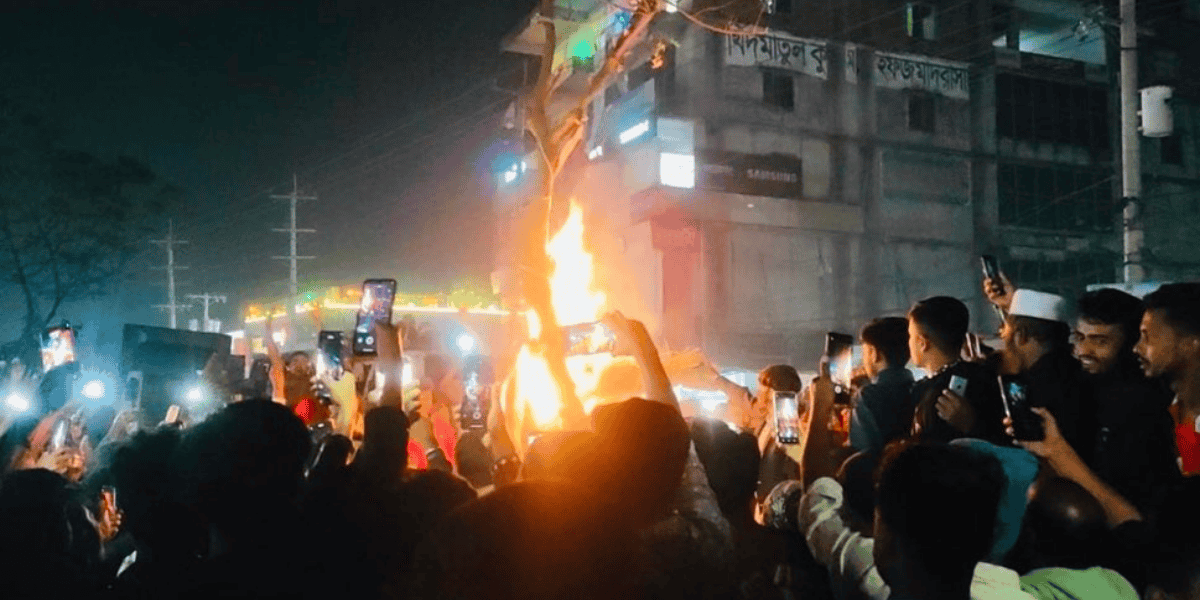
Nasreen stated that the accusation immediately incited mob violence. “That was enough,” she wrote, alleging that an enraged crowd attacked Dipu violently. She further claimed that although police initially intervened and took Dipu into custody, effectively placing him under police protection, he was later handed back to the mob or forcibly taken from custody, leading to his killing.

Sharing a video clip of Dipu while he was in police custody, Nasreen said the victim had consistently denied the blasphemy charge and informed the police that the accusation was a conspiracy by his coworker. Despite this, she alleged that no action was taken against the person who made the allegation.
“The police did not go after the coworker,” Nasreen claimed, questioning whether negligence, ideological bias, or external pressure played a role in the sequence of events that followed. She alleged that Dipu was later subjected to extreme violence by the mob, including physical assault, hanging, and burning.
Nasreen described the killing as a grim example of how blasphemy allegations can be weaponised against religious minorities in Bangladesh, particularly the Hindu community. She further alleged that the incident reflected a broader climate of intolerance and impunity, where mobs act without fear of consequences.
Highlighting the personal impact of the killing, Nasreen said Dipu was the sole breadwinner of his family. His income supported his disabled father, mother, wife, and child. She questioned the future of the family in the absence of financial and social support, and whether justice would be delivered.

“What will happen to them now? Who will help the relatives? Who will bring the murderers to justice?” she asked in her post, also stating that the family lacks the resources even to relocate for safety.
Nasreen’s remarks have once again drawn attention to concerns raised by rights groups about mob violence, misuse of blasphemy allegations, and the vulnerability of minority communities in Bangladesh. The incident has also raised questions about policing protocols and accountability in cases involving communal accusations.
No official response from Bangladeshi authorities regarding Nasreen’s allegations or details of the investigation into Dipu Chandra Das’s killing was available at the time of filing this report.