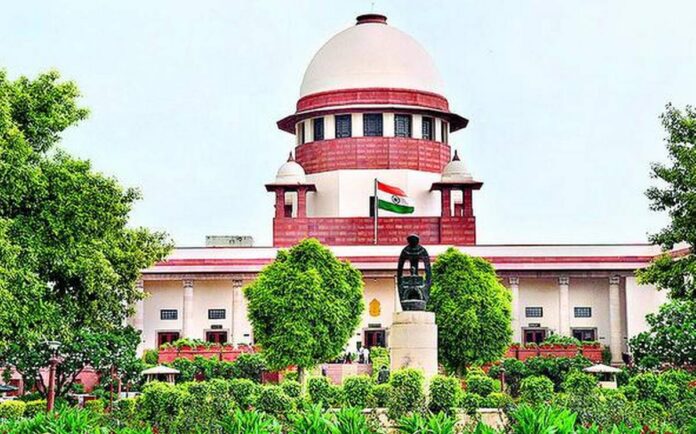
New Delhi, April 13: The Supreme Court of India on Monday issued notices to the Centre, the Election Commission of India and all states on a public interest litigation seeking biometric verification of voters at polling stations to curb electoral malpractices.
A Bench led by Chief Justice of India Surya Kant and Justice Joymalya Bagchi passed the order while hearing a petition filed by advocate Ashwini Kumar Upadhyay.
The court clarified that the relief sought in the petition cannot be implemented for the upcoming Assembly elections in certain states. It, however, said the issue of adopting such a mechanism for future parliamentary and state legislature elections requires examination.

The Bench observed that introducing fingerprint and iris-based authentication at polling stations would involve significant changes in existing rules and procedures. It also noted that such a system could impose a substantial financial burden.
The plea argued that biometric verification at polling booths would help address issues such as bribery, undue influence, impersonation, duplicate voting and ghost voting. It stated that despite measures already taken by the Election Commission, instances of electoral fraud continue to affect the credibility of the electoral process.
According to the petition, ensuring biometric authentication would allow only genuine and registered voters to cast their ballots, reinforcing the principle of one citizen, one vote. It further contended that such measures would strengthen the integrity and transparency of elections.

The petitioner submitted that the Election Commission has the authority under Article 324 of the Constitution to introduce biometric identification mechanisms to ensure free and fair elections. He also stated that a representation seeking such measures had been submitted to the Chief Election Commissioner and Election Commissioners on March 28, but no action was taken, leading to the filing of the PIL.
The court’s notice marks the beginning of judicial scrutiny into the feasibility of integrating biometric technology into the electoral process. The responses from the Centre, the Election Commission and state governments are expected to address legal, administrative and financial aspects linked to the proposal.
The matter remains under consideration, with the court indicating that any potential implementation would require careful evaluation before being applied to future elections.



