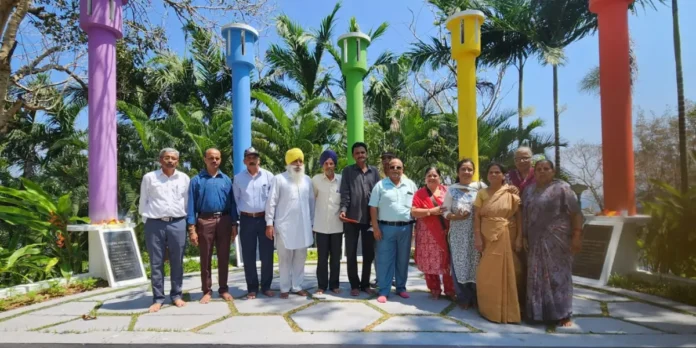
A solemn chapter of Andaman and Nicobar Islands’ wartime history resurfaced on Monday as attention turned to Shahid Sthal, a quiet coastal site that bears testimony to the execution of seven local officials by Japanese forces during World War II.
Located overlooking a serene bay, Shahid Sthal stands in stark contrast to the brutality it witnessed on March 30, 1943, when seven islanders, accused of espionage on alleged false grounds, were executed by a Japanese firing squad. The victims, all associated with the provincial administration, were believed to have played an active role in the Indian Independence League (IIL), which had emerged during the Japanese occupation of the islands from 1942 to 1945.

Historical accounts suggest that following the fall of British control, the Japanese occupation initially raised hopes of India’s impending independence. During this period, nationalist activities gained momentum, with the formation of the IIL and support for the Indian National Army (INA). The seven men later executed were reportedly instrumental in these efforts, making them targets of suspicion.
The individuals, Narayan Rao, Gopal Krishna, Itter Singh, Dr. Surendra Nath, Abdul Khaliq, Subedar Major Suba Khan, and Chotta Singh, were arrested on January 22, 1943. They were detained and allegedly subjected to severe torture in custody to extract confessions linking them to British intelligence operations.
Despite the lack of credible evidence, the detainees were accused of espionage. After weeks of incarceration and reported inhuman treatment, they were executed on March 30, 1943. The incident remains one of the most tragic episodes of repression during the Japanese occupation in the islands.

Today, Shahid Sthal serves as a memorial to these seven individuals, symbolising both sacrifice and the harsh realities of wartime rule. While the site appears tranquil, it continues to remind visitors and residents alike of the cost borne by local participants in the freedom struggle.
Such incidents underline the complex and often overlooked history of the islands during World War II, where shifting colonial powers and wartime allegiances deeply impacted local populations. The story of Shahid Sthal remains a poignant reminder of sacrifice, resilience, and the turbulent path to independence.