Seven crop varieties developed specifically for the Andaman and Nicobar Islands were released at the national level on January 4, 2026, as part of the dedication of 148 newly developed crop varieties to the nation in New Delhi. The island-specific varieties were developed by scientists of the ICAR–Central Island Agricultural Research Institute (ICAR-CIARI), marking a significant step towards strengthening food security, nutrition, and farm livelihoods in the Union Territory.
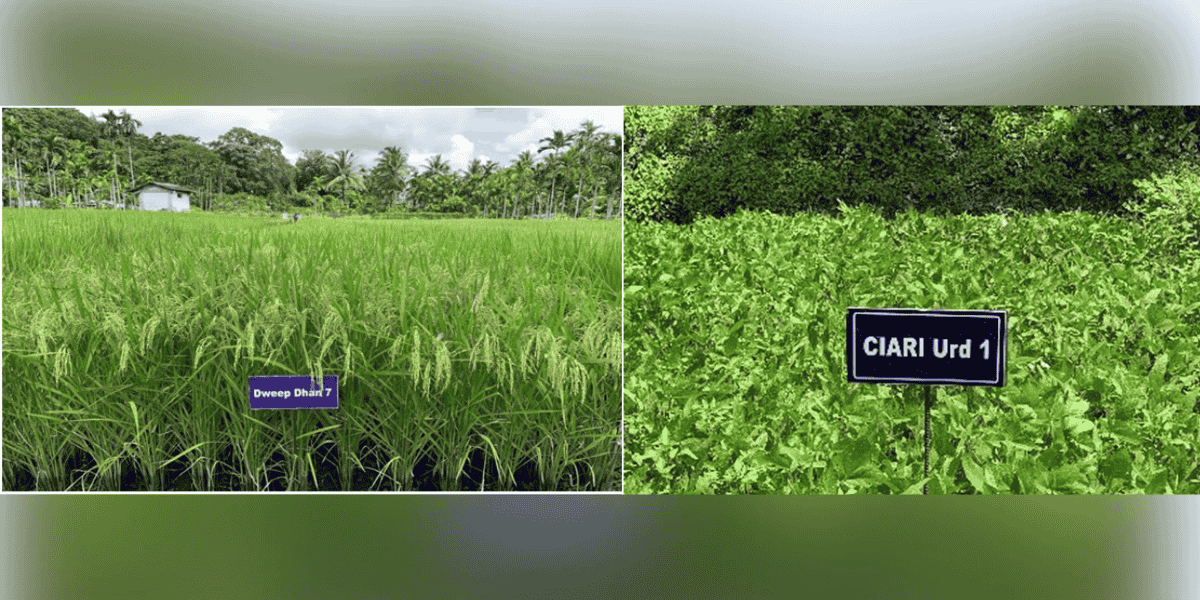
The newly released varieties include four rice varieties, Dweep Dhan 7, Dweep Dhan 8, Dweep Dhan 9, and Dweep Dhan 10, along with two green gram varieties, Dweep Mung 1 and Dweep Mung 4, and one black gram variety, Dweep Urd 1. These crops have been bred to suit the distinct agro-climatic and ecological conditions of the Andaman and Nicobar Islands, where farming faces constraints related to soil type, rainfall patterns, and geographic isolation.

Among the rice varieties, Dweep Dhan 8 and Dweep Dhan 9 are biofortified with higher levels of zinc, iron, and protein, addressing nutritional requirements alongside productivity. Dweep Dhan 7 and Dweep Dhan 10 are high-yielding varieties with resistance to bacterial leaf blight, a common disease affecting rice cultivation in humid island conditions, making them suitable for sustainable and low-input farming systems.
The pulse varieties, Dweep Mung 1, Dweep Mung 4, and Dweep Urd 1, offer improved yield potential, wider adaptability, and stable performance across growing conditions. Their introduction is expected to support crop diversification, reduce dependence on imported pulses, and enhance income opportunities for local farmers.
The varieties were developed through collaborative research involving plant breeders and pathologists at ICAR-CIARI. Disease resistance screening and management formed a key component of the breeding process, ensuring suitability for island ecosystems that are vulnerable to climatic stress and pest pressure. The research programmes were undertaken as part of ongoing efforts to promote climate-resilient and nutrition-sensitive agriculture in the Andaman and Nicobar Islands.

Seeds of all seven varieties are now available for farmers through ICAR-CIARI, Sri Vijaya Puram, and Krishi Vigyan Kendras located across the islands. The release and notification process was facilitated in coordination with the Agriculture and Animal Husbandry and Veterinary Services Department of the Andaman and Nicobar Administration.
The introduction of these island-specific crop varieties is expected to contribute to seed self-reliance, improved farm productivity, and sustainable agricultural practices, while addressing the unique challenges faced by farmers in the Andaman and Nicobar Islands.